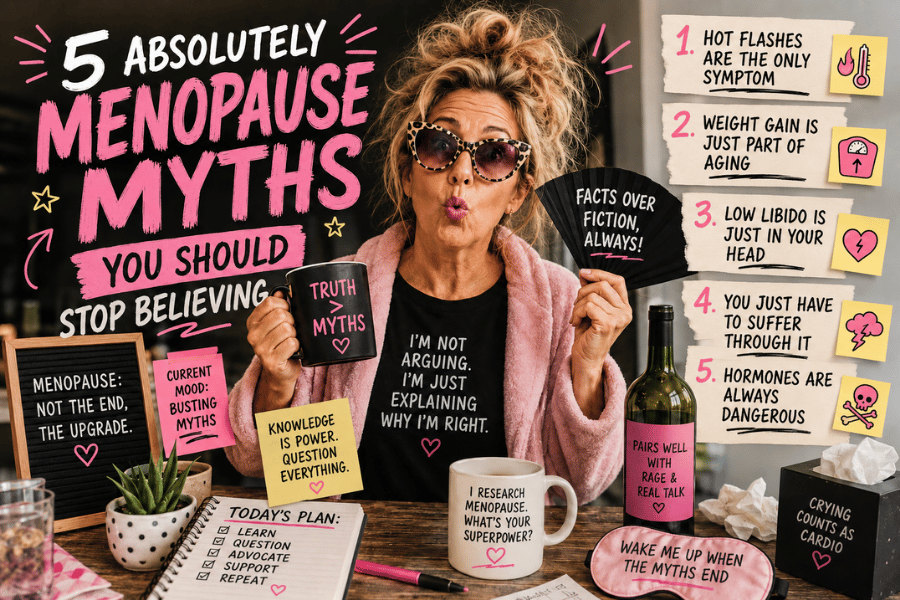
Menopause myths are everywhere.
They show up in exam rooms.
They show up on social media.
They show up in conversations with friends.
And sadly, they show up in the advice many women are given when they ask for help.
A menopause myth is an outdated belief that gets repeated so often people start treating it like medical fact.
Things like:
“Hot flashes are the only real menopause symptom.”
“Weight gain is just part of getting older.”
“Low libido is all in your head.”
“You just have to suffer through it.”
“Hormones are always dangerous.”
Nope. Not good enough.
Menopause is natural. Feeling miserable, dismissed, exhausted, inflamed, foggy, and invisible is not something women should be told to accept as their new normal.
Menopause myths do real damage.
They make women second-guess their own bodies. They delay care. They convince women to stay quiet because they think their symptoms are “normal aging” or “just stress.”
And let’s be honest. Too many women walk into a medical office with poor sleep, weight gain, anxiety, brain fog, joint pain, low libido, and mood changes — and walk out with an antidepressant, a sleep pill, or the classic “eat less and exercise more” speech.
That is not a full answer.
That is a Band-Aid on an amputation.
Symptoms are signals. They are your body’s way of saying, “Hey, something changed in here.” During perimenopause and menopause, one of the biggest changes is hormone decline.
That does not mean hormones explain every symptom. But they absolutely deserve a seat at the table.
Hot flashes get all the attention, but they are only one piece of the puzzle.
Many women never have severe hot flashes. Instead, they may notice:
Poor sleep
Brain fog
Anxiety
Mood swings
Joint pain
Weight gain
Low libido
Vaginal dryness
Dry skin
Fatigue
Hair changes
Heart palpitations
Worsening PMS
More belly fat
Feeling less like themselves
Menopause is not just a temperature problem. It is a whole-body hormone shift.
Estrogen, progesterone, testosterone, thyroid, insulin, and cortisol all talk to each other. When one system changes, the others often feel it too. It is like a group text where one person starts drama and suddenly everyone is involved.
Weight gain during menopause is common, but that does not mean it is simple.
Many women are told they need more willpower. That is lazy medicine.
In midlife, the body changes how it stores fat, builds muscle, handles insulin, manages stress, and burns energy. Lower estrogen can affect insulin sensitivity, inflammation, sleep, cravings, and belly fat storage.
So when a woman says, “I am doing the same things I used to do, but my body is changing,” she is not making excuses.
She is describing biology.
Yes, food matters.
Yes, movement matters.
Yes, strength training matters.
But hormones, sleep, stress, thyroid function, muscle loss, and metabolic health matter too.
Telling women to “just try harder” is not a treatment plan. It is a lazy slogan in a lab coat.
Low libido is one of the most dismissed menopause symptoms.
Women are often told they are tired, stressed, busy, distracted, or emotionally disconnected. Sometimes that may be part of the story. But it is not the whole story.
Hormone changes can affect desire, arousal, sensation, blood flow, vaginal comfort, mood, sleep, and energy.
If sex becomes painful because of vaginal dryness, thinning tissue, or irritation, the brain learns to avoid it. That is not a character flaw. That is your nervous system saying, “No thank you, I remember how this went last time.”
Low libido is not always “in your head.”
Sometimes it is in your hormones.
Sometimes it is in your tissues.
Sometimes it is in your sleep.
Sometimes it is in your stress load.
And usually, it is a mix.
Women deserve real evaluation, not shame.
This myth needs to retire immediately.
Yes, menopause is a normal stage of life. But normal does not mean untreatable.
Pregnancy is normal. We still offer care.
Aging is normal. We still check blood pressure.
Vision changes are normal. We still prescribe glasses.
So why do we tell women to suffer through hormone loss like it is some kind of loyalty test?
You do not get a trophy for white-knuckling your way through poor sleep, panic, rage, hot flashes, painful sex, belly weight, and brain fog.
You deserve options.
That may include lifestyle changes, nutrition support, strength training, sleep repair, stress support, targeted supplements, lab testing, hormone therapy when appropriate, and a provider who actually listens.
Suffering should not be the standard of care.
This is one of the biggest menopause myths of all.
Many women still fear hormone therapy because of old headlines, outdated information, and one-size-fits-all warnings. The truth is more nuanced.
Hormone therapy is not right for every person. But it is also not automatically dangerous for every person.
The type of hormone matters.
The dose matters.
The route matters.
The timing matters.
The person’s health history matters.
The monitoring matters.
This is where women need individualized care, not fear-based medicine.
Blanket statements like “hormones are bad” do not help women make informed decisions. They shut down the conversation before it even starts.
Women deserve to understand the possible benefits, risks, options, and alternatives so they can make educated choices with a qualified provider.
Hormones are chemical messengers. Think of them like text messages your body sends to your brain, bones, muscles, skin, heart, metabolism, and reproductive tissues.
When hormone levels shift, the messages change.
Estrogen helps support temperature control, sleep, skin, vaginal tissue, bones, brain function, mood, cholesterol balance, and insulin sensitivity.
Progesterone helps support calm, sleep, mood stability, and balance with estrogen.
Testosterone plays a role in libido, motivation, muscle, energy, confidence, and strength.
When these hormones decline or become imbalanced, women may feel like their body suddenly changed the rules.
That is why menopause care should look at the full picture. Not just one symptom. Not just one lab. Not just one prescription.
Instead of asking, “Is this just menopause?” ask:
“What changed in my body, and what can I do about it?”
That question opens the door to better care.
It helps you look at hormones, thyroid, insulin, inflammation, stress, sleep, nutrition, muscle, and lifestyle. It moves you out of the “just deal with it” box and into real problem-solving.
Because here is the truth:
Your symptoms are not a moral failure.
Your body is not broken.
You are not crazy.
You are not lazy.
You are not asking for too much.
You are asking for answers.
And you deserve them.
If you are tired of being told everything is “normal” while you feel anything but normal, it is time to get better information.
Menopause should not be a guessing game. You deserve to understand what is happening in your body, what your options are, and how to advocate for care that actually makes sense.
That is why I created a full menopause myths download to help you separate facts from fiction.
Inside, you will learn more about common menopause myths, why they keep women stuck, and what questions to start asking so you can get clearer answers.
Ready to stop believing the myths and start understanding your body?
Because menopause is not the end.
It is the upgrade.
But only when women get the truth.
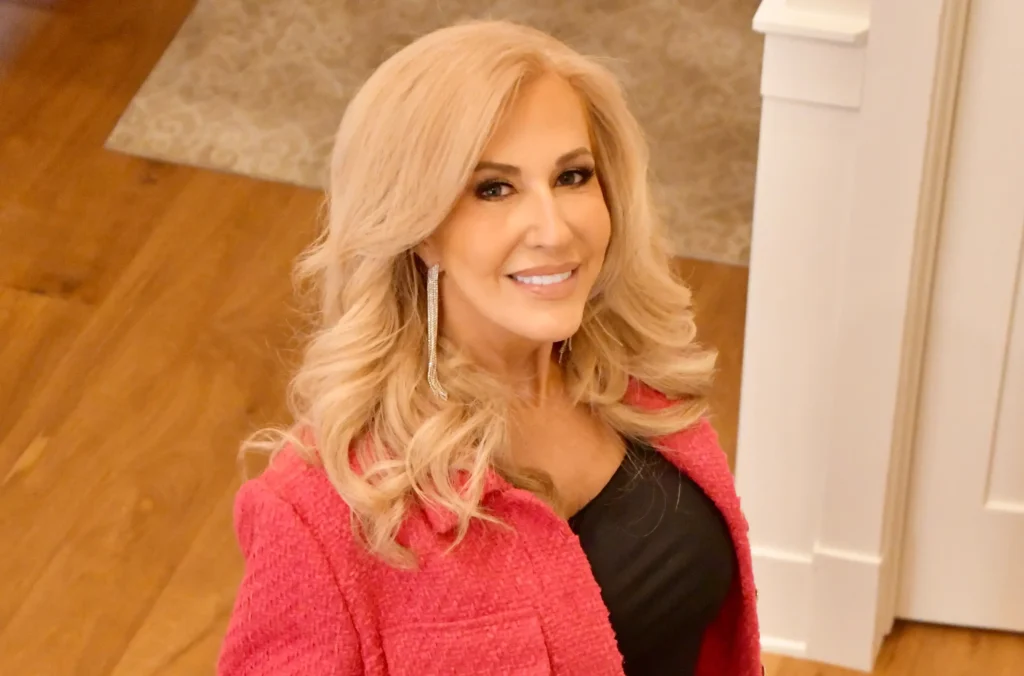
Dr. Tammy is a renowned expert in women’s health with over twenty years of experience, specializing in personalized bio-identical hormone replacement therapy (BHRT). She is dedicated to helping women navigate menopause using natural, individualized solutions to restore hormonal balance and enhance vitality. A trusted leader in the field, her compassionate care and innovative treatments have transformed countless lives.
Aging involves a natural decline in key hormones, which can affect your health in many ways. Reclaim your vitality by trying bioidentical HRT. It’s a way to address the noticeable symptoms—like mood swings, fatigue, and hot flashes—as well as the silent, long-term health concerns you might not recognize.