Timing matters more than almost anything
The benefit-to-risk balance is most favourable for healthy women under 60 or within about ten years of their final period. Starting much later shifts that calculation.
What HRT actually is — and what the evidence says in 2026
Hormone therapy is the most studied and most misunderstood treatment in women's health. This guide explains what it is, how bioidentical therapy differs, which hormones are involved, what the benefits and risks really are, and what the research found once the headlines moved on.
Education first. Nothing on this page is a recommendation — it's the background you'd want before a conversation with your own licensed healthcare provider.

Hormone replacement therapy (HRT) — increasingly called menopausal hormone therapy — replaces the hormones the ovaries stop producing. In practice that means estrogen, progesterone for anyone with a uterus, and sometimes testosterone.
Bioidentical hormone replacement therapy (BHRT) describes hormones whose molecular structure matches the ones the body makes. Estradiol and micronized progesterone are bioidentical and FDA-approved. Compounded bioidentical preparations go a step further, allowing a pharmacy to prepare a specific strength and base rather than working from a handful of fixed tablet sizes.
The distinction that matters clinically is usually not the marketing word but three practical variables: which hormone, at what dose, delivered how. Oral estrogen and transdermal estradiol behave differently in the body. A synthetic progestin and micronized progesterone are not interchangeable.
Plenty of bioidentical hormones are conventional, FDA-approved prescriptions. What varies is whether a preparation is manufactured at a fixed strength or compounded to order. Both are prescription medicines, and both require your own licensed clinician, a history and follow-up — Hormone Bliss does not prescribe or oversee this care.
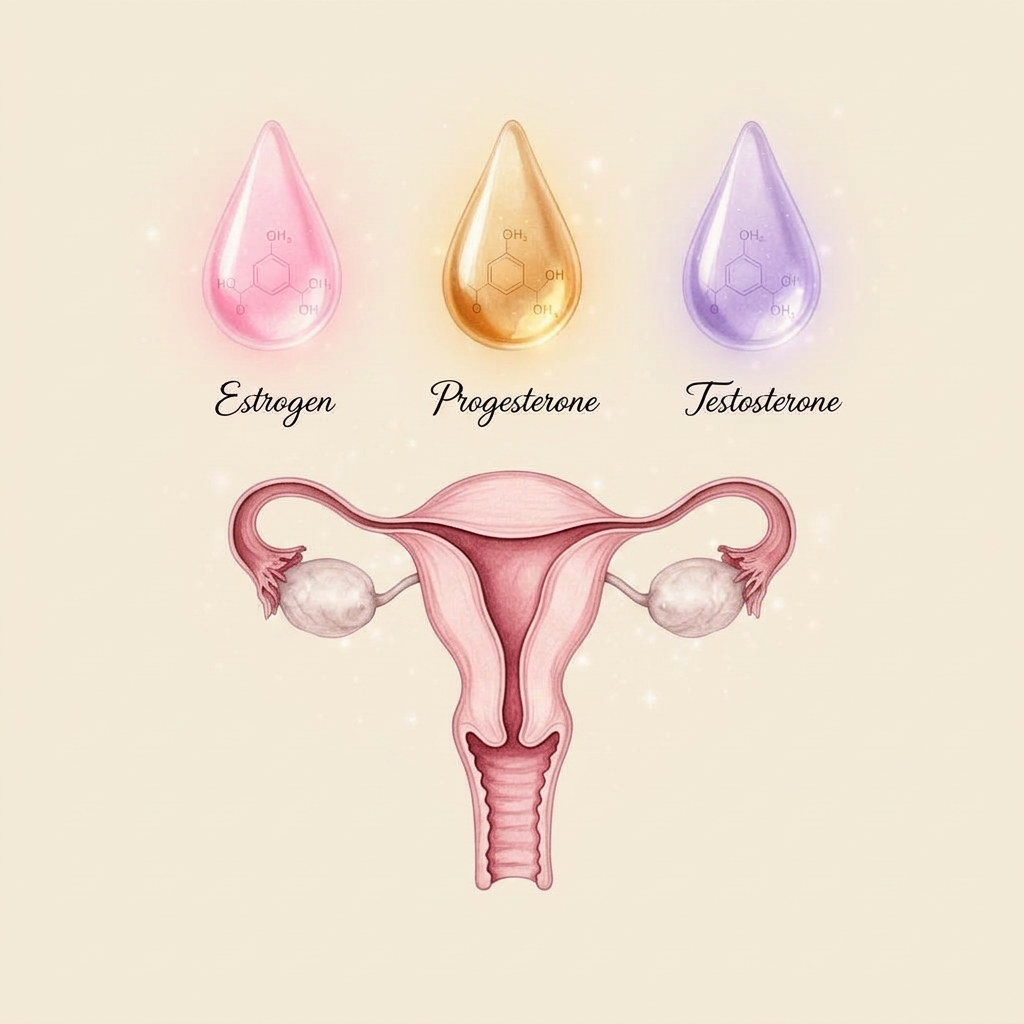
Hormone therapy is rarely about one molecule. Each hormone below has its own guide explaining what it does, what low and high look like, and how it interacts with the others.
Regulates temperature, sleep architecture, skin and vaginal tissue, blood vessels and bone turnover. Its decline drives the symptoms most people picture when they hear 'menopause'.
Learn About EstrogenCalms the nervous system and protects the uterine lining. In anyone with a uterus taking estrogen, progesterone is not optional — it is what keeps the endometrium safe.
Learn About ProgesteroneA women's hormone too. It contributes to libido, motivation, muscle mass and energy, and it falls gradually from the late twenties onward rather than all at once.
Learn About TestosteroneAn adrenal precursor the body converts into testosterone and estrogens in peripheral tissue — increasingly relevant after the ovaries stop being the main source.
Learn About DHEAThyroid hormone and cortisol aren't replaced by HRT, but they shape how it feels. Both are usually evaluated at the same time — see thyroid and cortisol.
Knowing which stage you're in changes what your symptoms mean — and whether hormone therapy is even the right conversation yet.
Typically 35–45
Ovulation becomes inconsistent, progesterone falls first, and estradiol swings high then low. Cycles can still look regular while symptoms are already disruptive.
Read About Perimenopause12 months without a period
Estradiol, progesterone and testosterone settle at a fraction of their former levels, and what used to feel cyclical becomes constant.
Read About MenopauseThe decades after
Symptoms may soften, but the long-term effects of low estrogen on bone, the vagina and urinary tract, and cardiometabolic health continue.
Read About PostmenopauseOften overlooked
Surgical or medical menopause, chronic stress, thyroid disease and certain medications can pull hormones down earlier and faster than age alone would.
Read About Accelerating factorsPerimenopause can start a decade before your last period — which is why so many women are told their labs are normal while they feel anything but.
Effects are strongest where estrogen receptors are densest: the brain's temperature centre, the vaginal and urinary tissues, and bone.
Hormone therapy remains the most effective treatment available for hot flashes and night sweats, which is the consensus position of every major menopause society.
When night sweats and 3am waking ease, sleep consolidates. Many women report steadier mood as a downstream effect rather than a separate one.
Vaginal dryness, discomfort with intimacy and recurrent urinary symptoms respond well to estrogen — often to a low-dose local preparation alone.
Estrogen slows the bone loss that accelerates sharply in the first years after menopause, and is approved for the prevention of postmenopausal osteoporosis.
Restoring estradiol and, where appropriate, testosterone can make it easier to hold muscle and respond to training. Hormone therapy is not a weight-loss treatment.
In women who start therapy near menopause, observational and trial data suggest a more favourable cardiovascular and all-cause mortality picture than in those who start much later.
Hormone therapy is not risk-free, and it isn't right for everyone. The variables below do most of the work in deciding where an individual lands.
The benefit-to-risk balance is most favourable for healthy women under 60 or within about ten years of their final period. Starting much later shifts that calculation.
Transdermal estradiol — creams, gels, patches — is not associated with the increase in venous clot risk seen with oral estrogen, because it bypasses first-pass liver metabolism.
The increase seen with combined estrogen-plus-progestin therapy in the Women's Health Initiative was under one additional case per thousand women per year, and estrogen-only therapy in that trial did not show an increase.
A personal history of breast cancer, unexplained vaginal bleeding, active liver disease, or a prior stroke or clotting event all change what is appropriate. This is a clinical decision, never a questionnaire.
Unopposed estrogen increases the risk of endometrial hyperplasia and cancer. Anyone with a uterus taking systemic estrogen needs adequate progesterone alongside it.
Compounded bioidentical preparations allow precise dosing, but they carry the same physiology and the same monitoring requirements as any other hormone therapy.
Nothing here can tell you whether hormone therapy is appropriate for your body. That requires a full history, an examination of your risks, and — in most cases — lab work, reviewed by your own licensed clinician. Hormone Bliss does not prescribe, evaluate or oversee prescription hormone therapy.
Most of the fear women carry about hormone therapy traces to a single trial reported in 2002. Here is what happened next.
2002
The WHI's early reporting caused a global collapse in hormone therapy use. The average participant was 63 — more than a decade past menopause — and the trial used oral conjugated equine estrogen with a synthetic progestin, not transdermal estradiol with progesterone.
2007–2016
Re-analyses of the WHI, along with the ELITE and KEEPS trials, converged on the same theme: age at initiation and years since menopause substantially change the observed outcomes, particularly for cardiovascular measures.
2017
Extended follow-up published in JAMA found no increase in all-cause, cardiovascular or cancer mortality with either regimen over 18 years — a materially different headline from the one most women remember.
2022–present
The Menopause Society, ACOG and the Endocrine Society all now state that for symptomatic women under 60 or within ten years of menopause, the benefits of hormone therapy generally outweigh the risks.
Each symptom below has its own guide explaining what drives it and which hormones are usually involved.
Ready to look at care?
If you already understand the therapy and want to see how it's delivered — testing, formulation, coaching and follow-up — that's the program page.
Explore Hormone Replacement TherapyStraight answers about HRT, BHRT, safety and the research — no pressure, no jargon.
The assessment maps what you're experiencing to the hormones most likely behind it. If hormone therapy looks relevant, the program page explains how care at Hormone Bliss works.