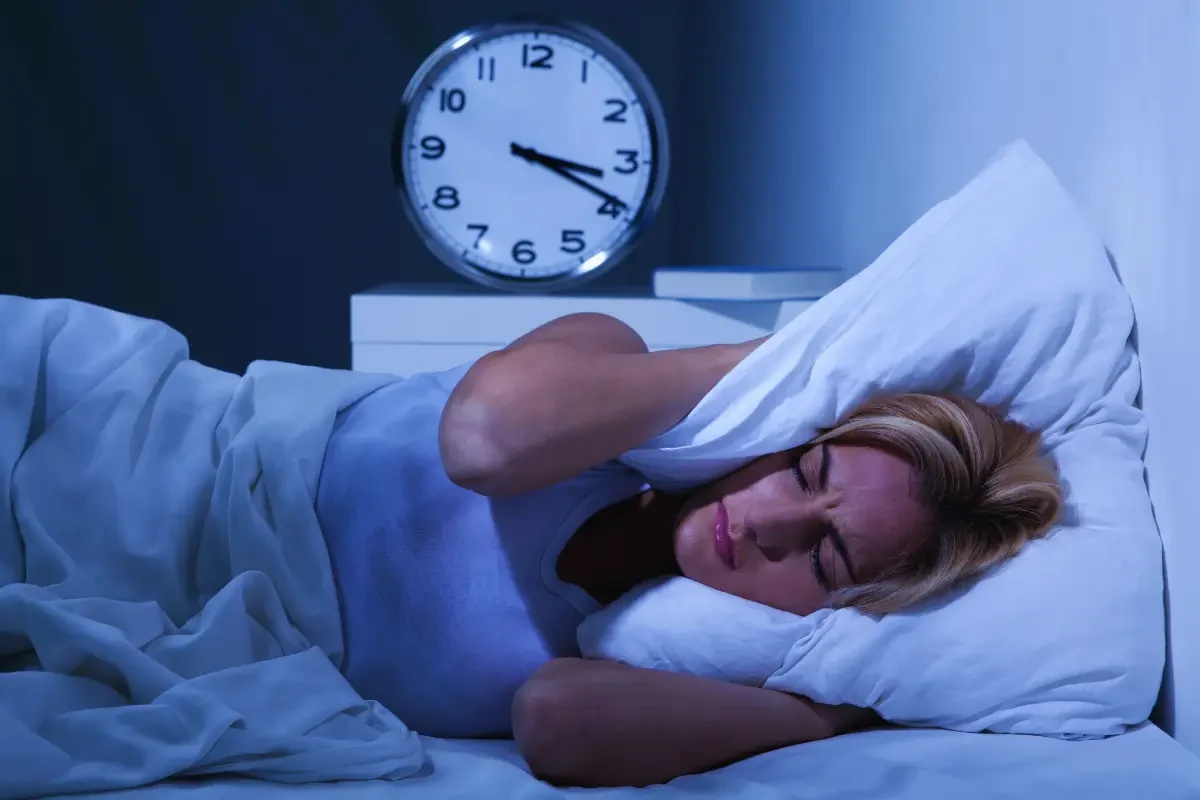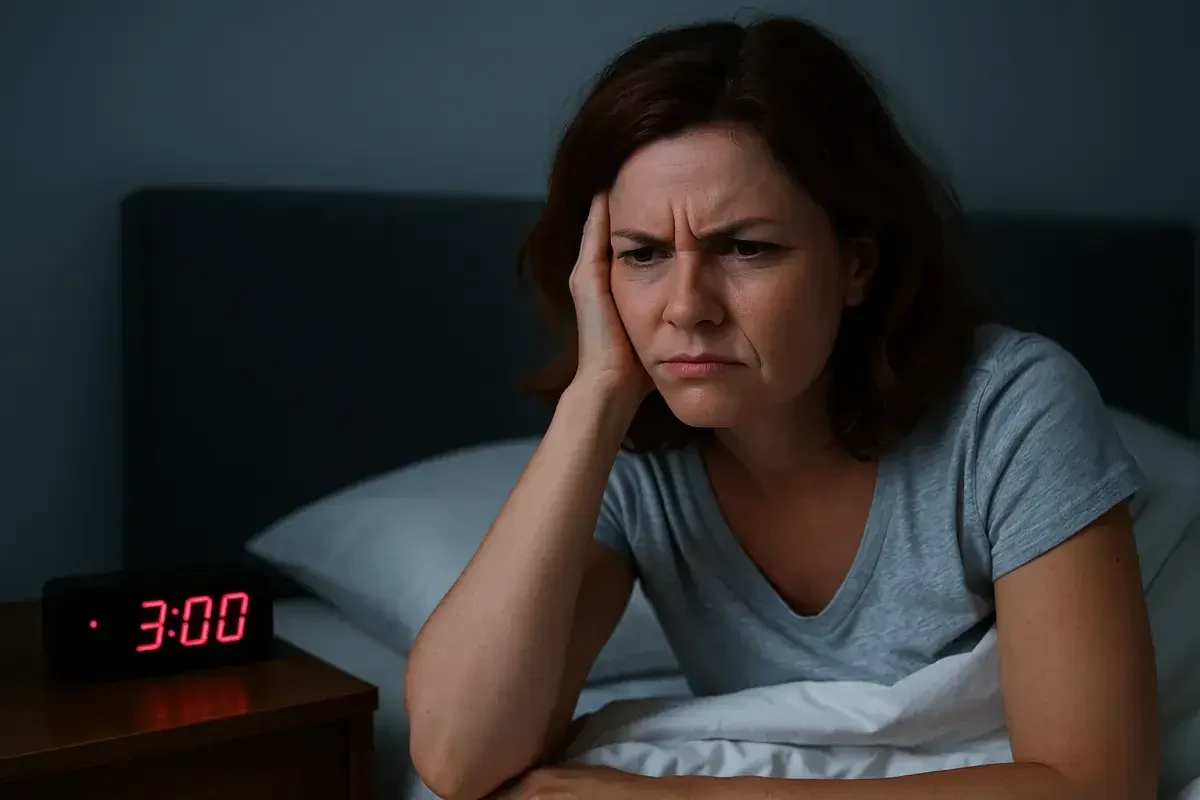

Waking at 3 a.m. is one of the most common — and most exhausting — parts of perimenopause. Here is what changes in your sleep, why it happens, and the strategies that actually help.
Waking at 3 a.m. is one of the most common — and most exhausting — parts of perimenopause. Here is what changes in your sleep, why it happens, and the strategies that actually help.
What's covered
Sleep problems during menopause are usually caused by shifting estrogen and progesterone, which disrupt body-temperature regulation, calm-signaling in the brain, and the timing of your sleep cycles. The result is trouble falling asleep, night sweats, and early-morning waking. Most women see meaningful improvement by combining temperature control, a consistent sleep window, evening habit changes, and — where appropriate — hormone support discussed with a clinician.
If you used to sleep through anything and now find yourself wide awake at 3:14 a.m. with your heart going, you are not imagining it and you are not doing anything wrong. Sleep disruption is one of the most frequently reported symptoms of perimenopause and menopause, and it is often the one that makes every other symptom worse.
- Falling estrogen destabilizes body-temperature control, which fragments sleep even without a full hot flash.
- Progesterone has a naturally calming effect; as it declines, falling asleep and staying asleep get harder.
- Night sweats, anxiety, restless legs, and increased sleep apnea risk all rise in midlife and stack on top of each other.
- Cool room, consistent wake time, alcohol limits, and morning light are the highest-yield first moves.
- Persistent insomnia, loud snoring, or daytime sleepiness deserve a clinical evaluation — not just better sleep hygiene.
Why does menopause disrupt sleep?
Sleep is a temperature event as much as a brain event. Your core temperature has to drop slightly for you to fall asleep and stay in deep sleep. Estrogen helps regulate the brain's thermostat in the hypothalamus. When estrogen becomes erratic — which is the defining feature of perimenopause — that thermostat becomes twitchy, and small temperature shifts that never used to register are suddenly enough to pull you out of deep sleep.
Progesterone plays a different role. It supports GABA activity, the brain's main calming signal, which is part of why many women describe the luteal phase of their cycle as the "sleepy" half. As progesterone declines and becomes unpredictable, that built-in sedative effect goes with it. You can be exhausted and still find your mind switched on the moment your head hits the pillow.
Layered on top: cortisol rhythms tend to shift with age, bladder changes wake you more often, and joint aches make it harder to settle. Sleep in midlife rarely breaks for one reason.
Common menopause sleep patterns and what usually drives them
| What you notice | Most common drivers | Where to start |
|---|---|---|
| Can't fall asleep | Low progesterone, evening cortisol, screens and late caffeine | Fixed wake time, caffeine cutoff by early afternoon, wind-down routine |
| Waking at 2-4 a.m. | Temperature instability, blood sugar dips, alcohol rebound | Cooler room, protein at dinner, reduce or drop evening alcohol |
| Drenching night sweats | Vasomotor instability from falling estrogen | Layered breathable bedding, cooling mattress pad, clinical hormone discussion |
| Sleeping but never rested | Fragmented deep sleep, possible sleep apnea | Ask for a sleep study, especially with snoring or morning headaches |
| Waking to urinate repeatedly | Genitourinary changes, fluid timing | Front-load fluids earlier in the day, discuss local vaginal estrogen with a clinician |
Are night sweats the same as insomnia?
No — and the distinction matters. Night sweats are vasomotor events: a sudden surge of heat, sweating, and often a racing heart. Insomnia is difficulty falling or staying asleep regardless of temperature. Many women have both, and they feed each other. A night sweat wakes you; the frustration and adrenaline keep you awake for another 90 minutes; the next night you go to bed anxious about repeating it, and anticipatory anxiety alone can delay sleep onset.
Research consistently finds that sleep complaints rise sharply during the menopause transition, with roughly 40-60% of women in perimenopause and postmenopause reporting disturbed sleep — a far higher rate than in their thirties.
What actually helps menopause sleep problems?
A practical order of operations
- 1
Fix the temperature first
Set the bedroom to 60-67°F (15-19°C), use breathable cotton or linen layers you can throw off in seconds, and keep a fan running. Cooling mattress pads and moisture-wicking sleepwear are unglamorous and genuinely effective.
- 2
Anchor your wake time
A consistent wake time — including weekends — is a stronger sleep signal than a consistent bedtime. Follow it with 10 minutes of outdoor light to reset circadian timing.
- 3
Audit alcohol and caffeine
Alcohol shortens sleep latency and then triggers a rebound wake-up a few hours later, precisely in the 2-4 a.m. window. Caffeine has a half-life of about five hours, so a 3 p.m. coffee is still working at 8 p.m.
- 4
Eat to prevent the 3 a.m. dip
A dinner with adequate protein and some slow carbohydrate keeps blood sugar steadier overnight. Skipping dinner or eating a very light, carb-only meal can produce a middle-of-the-night adrenaline wake-up.
- 5
Train the wind-down
Thirty to sixty minutes of dim, low-stimulation time before bed. If you are awake more than 20 minutes, get up, keep lights low, and do something dull until you feel sleepy. Lying in bed frustrated teaches your brain that bed is a place for being awake.
- 6
Move, but early enough
Regular strength and cardio work improves sleep quality. Intense evening training raises core temperature and can push sleep onset later for some women — test the timing on yourself.
- 7
Escalate if it persists
If disrupted sleep lasts more than a few weeks despite these changes, bring it to a clinician. Cognitive behavioral therapy for insomnia (CBT-I) has the strongest evidence base of any insomnia intervention, and hormone therapy is an appropriate conversation for many women.
"Bad sleep in midlife is just something you have to live with."
Sleep disruption in menopause is common, but common is not the same as untreatable. Temperature control, CBT-I, addressing night sweats, and screening for sleep apnea all change outcomes — and most women improve with a combination rather than a single fix.
Where hormones fit in
For many women, the sleep problem is downstream of the hot flash problem. When vasomotor symptoms improve, sleep often follows. That is why hormone therapy — a prescription decision made with a licensed clinician who knows your history — is frequently part of the conversation for women with disruptive night sweats.
Hormone Bliss also offers non-prescription bioidentical hormone support creams that many women use as part of a self-directed daily routine. These are retail wellness products, not prescription therapy, and they are not reviewed or approved for you by a physician. If your sleep disruption is severe, or if you have a history of hormone-sensitive conditions, blood clots, or cardiovascular disease, that is a clinician conversation first.
When to see a doctor about menopause sleep problems
- Loud snoring, gasping, or witnessed pauses in breathing
- Falling asleep unintentionally during the day or while driving
- Insomnia lasting more than three nights a week for over a month
- New or worsening depression, panic, or intrusive low mood
- Morning headaches, high blood pressure, or unexplained daytime exhaustion
- Restless, crawling sensations in the legs at night
Common questions
Answer a few questions and see which non-prescription bioidentical hormone support routine fits your symptoms.
Medical Disclaimer: This article is educational and is not medical advice, diagnosis, or treatment. Hormone Bliss creams are non-prescription retail products. Talk with a licensed clinician about your own symptoms, history, and medications before making changes.