
Skin that suddenly feels tight, itchy, papery, or crepey is one of the most under-discussed menopause symptoms. Here's the collagen and barrier story — and what genuinely restores comfort.
Skin that suddenly feels tight, itchy, papery, or crepey is one of the most under-discussed menopause symptoms. Here's the collagen and barrier story — and what genuinely restores comfort.
What's covered
Dry skin during menopause is driven by falling estrogen, which reduces collagen, natural oil production, hyaluronic acid, and the skin's ability to hold water. Skin becomes thinner, itchier, and slower to repair. Relief comes from rebuilding the barrier — cream-based moisturizers with ceramides, gentle cleansing, humidity, and consistent sun protection — rather than from exfoliating harder.
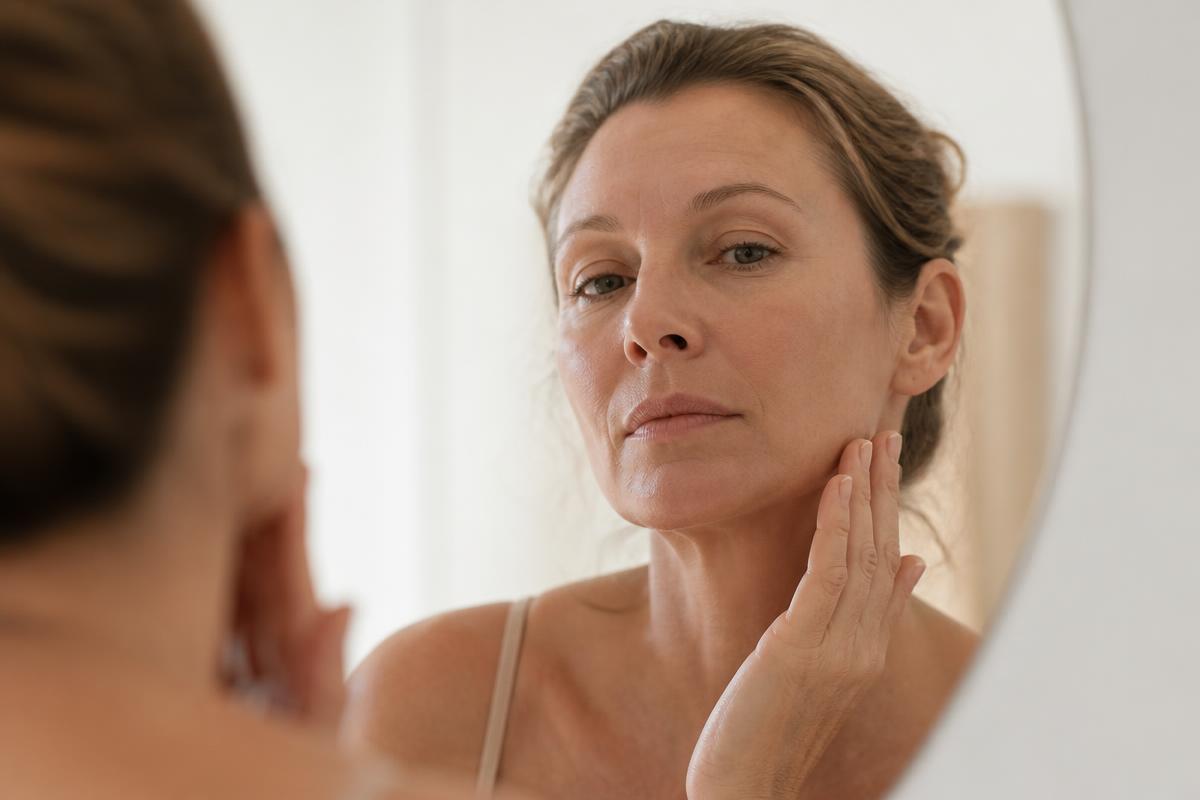
Women often describe it the same way: skin that used to look after itself now needs constant attention. Shins that itch at night. Backs of hands that look crepey. A face that drinks in moisturizer and feels tight again by mid-morning. This is a real, measurable change, not a perception.
- Studies indicate women lose a substantial share of skin collagen in the first five years after menopause, with slower ongoing loss afterward.
- Lower estrogen means less sebum, less hyaluronic acid, and a weaker moisture barrier.
- Itching without a visible rash is common and often worse on the lower legs at night.
- Cream and ointment textures outperform lotions; apply to damp skin.
- Persistent itch, rashes, or open sores need a clinical evaluation rather than more moisturizer.
Why does menopause dry out your skin?
Estrogen receptors are present throughout the skin. Estrogen supports collagen production, which gives skin its structure and thickness; sebum production, which forms a protective surface film; and hyaluronic acid, which binds water in the dermis. When estrogen declines, all three fall together.
The consequence is a skin barrier that loses water faster than it can replace it — a process called transepidermal water loss. Skin that leaks moisture feels tight, looks dull, itches, and shows fine lines more prominently. It also heals more slowly and reacts more easily to products that never used to bother you.
Dermatology research has reported that skin collagen content declines by roughly 30% in the first five years after menopause, followed by a slower annual decline. This is why the change can feel abrupt rather than gradual.
Where dryness shows up first
| Area | What women notice | What helps most |
|---|---|---|
| Lower legs and shins | Itching at night, fine scaling | Thick ointment after showering, shorter warm showers |
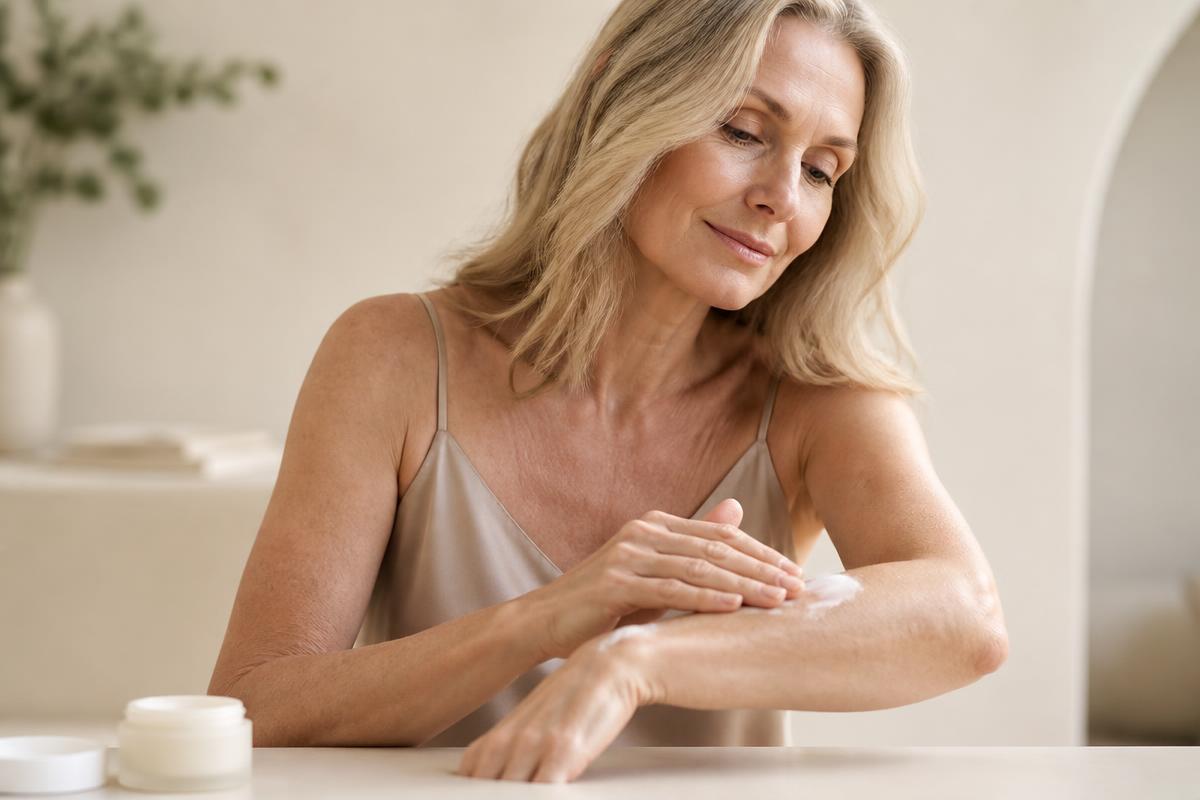
| Hands and forearms | Crepey texture, papery feel | Ceramide cream reapplied after every hand wash, daily SPF |
| Face | Tightness, flaking around the nose, makeup catching | Cream cleanser, hyaluronic serum on damp skin, occlusive night cream |
| Chest and neck | Fine crosshatch lines, sun damage becoming visible | Retinoid two to three nights weekly, daily SPF |
| Vulvar and vaginal tissue | Dryness, irritation, discomfort with intimacy | Discuss local vaginal estrogen or moisturizers with a clinician |
How to relieve menopausal dry skin
A barrier-first routine
- 1
Change how you wash
Lukewarm, not hot. Under 10 minutes. A fragrance-free, non-foaming cleanser or a gentle cream wash. Hot water strips the very lipids you are trying to keep.
- 2
Moisturize within three minutes of showering
Applying to damp skin traps the water still on the surface. This single timing change often makes more difference than switching products.
- 3
Choose the right texture
Ceramides, glycerin, urea, shea, and petrolatum for the body. Lotions in pump bottles are mostly water; jars and tubes of cream do more for menopausal skin.
- 4
Add hyaluronic acid correctly
It draws water in — so apply it to damp skin and seal it with a cream. Applied to dry skin in a dry room, it can pull moisture out of the skin instead.
- 5
Introduce a retinoid slowly
Retinoids support collagen and texture over months. Start two nights a week, buffer with moisturizer, and expect an adjustment period.
- 6
Control your environment
A bedroom humidifier through winter, softer laundry detergent, and cotton rather than wool against the skin all reduce night-time itching.
- 7
Support skin from the inside
Adequate protein, omega-3 fats, and consistent hydration matter. They will not replace topical care, but deficits show on the skin quickly at this stage of life.
"Dry, flaky skin means I need to exfoliate more."
Flaking in menopause is usually a damaged barrier, not a buildup problem. Aggressive scrubbing and frequent acids strip what little lipid film remains and reliably make the dryness worse. Repair first; exfoliate sparingly, if at all.
When dryness is more than dryness
- Itching intense enough to disturb sleep or break the skin
- A rash, blistering, or weeping areas
- Skin changes alongside fatigue, weight change, or cold intolerance (possible thyroid involvement)
- Vulvar itching, burning, splitting, or pain — this deserves a proper genitourinary evaluation
- Any new lesion that changes shape, color, or bleeds
Common questions
Answer a few questions to see which non-prescription bioidentical hormone support routine fits your symptom pattern.
Medical Disclaimer: This article is educational and is not medical advice, diagnosis, or treatment. Hormone Bliss creams are non-prescription retail products. Talk with a licensed clinician about your own symptoms, history, and medications before making changes.