
The scale moves, the shape changes, and everything that used to work stops working. Here's the real physiology behind midlife weight gain — and the strategies with actual evidence behind them.
Menopause weight gain is caused by a combination of age-related muscle loss, falling estrogen redistributing fat toward the abdomen, reduced insulin sensitivity, disrupted sleep, and lower daily activity. Most women gain gradually through the transition, and the shape change is often more noticeable than the number. Strength training, higher protein intake, sleep repair, and — for some — medical weight management are what reliably move it.
The most demoralizing part is not the weight. It is that the same habits that worked for two decades stopped producing the same result, and the usual advice — eat less, move more — makes it worse by accelerating muscle loss.
- Aging drives most of the weight gain; menopause drives most of the change in where fat is stored.
- Muscle mass declines steadily from the thirties onward unless resistance training defends it.
- Estrogen decline shifts fat storage from hips and thighs toward visceral abdominal fat.
- Aggressive calorie restriction backfires by stripping muscle and lowering daily energy expenditure.
- Prescription medical weight management is an option for some women — a clinician decision, not a retail one.
Is it menopause or is it age?
Both, and they are doing different jobs. Longitudinal research suggests midlife women gain roughly one to two pounds per year through the transition, and that this gain tracks with chronological aging more than with menopausal status itself. What tracks specifically with menopause is body composition: the redistribution of fat from the hips and thighs to the abdomen, and an increase in visceral fat around the organs.
That distinction matters because visceral fat is metabolically active and carries different health implications than subcutaneous fat. It is also why waist measurement is often a more useful tracking tool than weight alone during this period.
What is actually changing
| Driver | What it does | What counteracts it |
|---|---|---|
| Sarcopenia (muscle loss) | Lowers resting metabolic rate; reduces glucose disposal | Progressive resistance training, adequate protein |
| Estrogen decline | Shifts fat storage to the abdomen; reduces insulin sensitivity | Strength work, fiber, clinical hormone discussion |
| Poor sleep | Raises hunger signaling and cravings; lowers next-day activity | Treating night sweats and insomnia directly |
| Reduced NEAT | Fewer incidental daily movements as life gets busier and joints ache | Step targets, standing breaks, walking meetings |
| Chronic stress | Elevated cortisol favors central fat storage | Sleep, recovery, realistic training load |
Muscle is metabolically expensive tissue. Losing it lowers the number of calories your body burns at rest — which is why two women of identical weight can have meaningfully different energy needs based on body composition alone.
What actually works for menopause weight gain
Ordered by effect size
- 1
Strength train two to four times a week
Non-negotiable, and the most commonly skipped step. Lifting preserves and builds the muscle that sets your metabolic rate, improves insulin sensitivity, and protects bone. Progressive load matters — light weights for high reps will not do the same job.
- 2
Eat enough protein
Roughly 25-40g per meal is a practical target for most midlife women. Protein preserves muscle during weight loss, supports satiety, and is the single easiest dietary change to measure.
- 3
Fix sleep before fixing diet
Short sleep raises ghrelin, lowers leptin, and cuts next-day spontaneous movement. Women who address night sweats and insomnia frequently find appetite regulation improves without deliberately dieting.
- 4
Walk more than you think you need to
Non-exercise activity is a large and underrated component of daily energy expenditure, and it declines quietly in midlife. Steps are also joint-friendly and stress-lowering.
- 5
Build meals around fiber and whole foods
Fiber supports satiety, blood sugar stability, and gut health, and most women fall well short of recommended intake. Focus on adding rather than restricting.
- 6
Stop crash dieting
Severe restriction lowers metabolic rate, strips muscle, and drives the regain cycle. A modest deficit alongside strength training and high protein changes body composition; aggressive deficits mostly change the scale temporarily.
- 7
Consider medical support if appropriate
For some women, prescription medical weight management — including GLP-1 medications through a licensed telemedicine clinician — is a reasonable option after a proper evaluation of health history, labs, and goals.
"I just need to eat less and do more cardio."
Cardio-plus-restriction is the combination most likely to accelerate muscle loss in midlife, which lowers metabolic rate and makes the next attempt harder. Resistance training with adequate protein produces better body-composition results even when the scale moves more slowly.
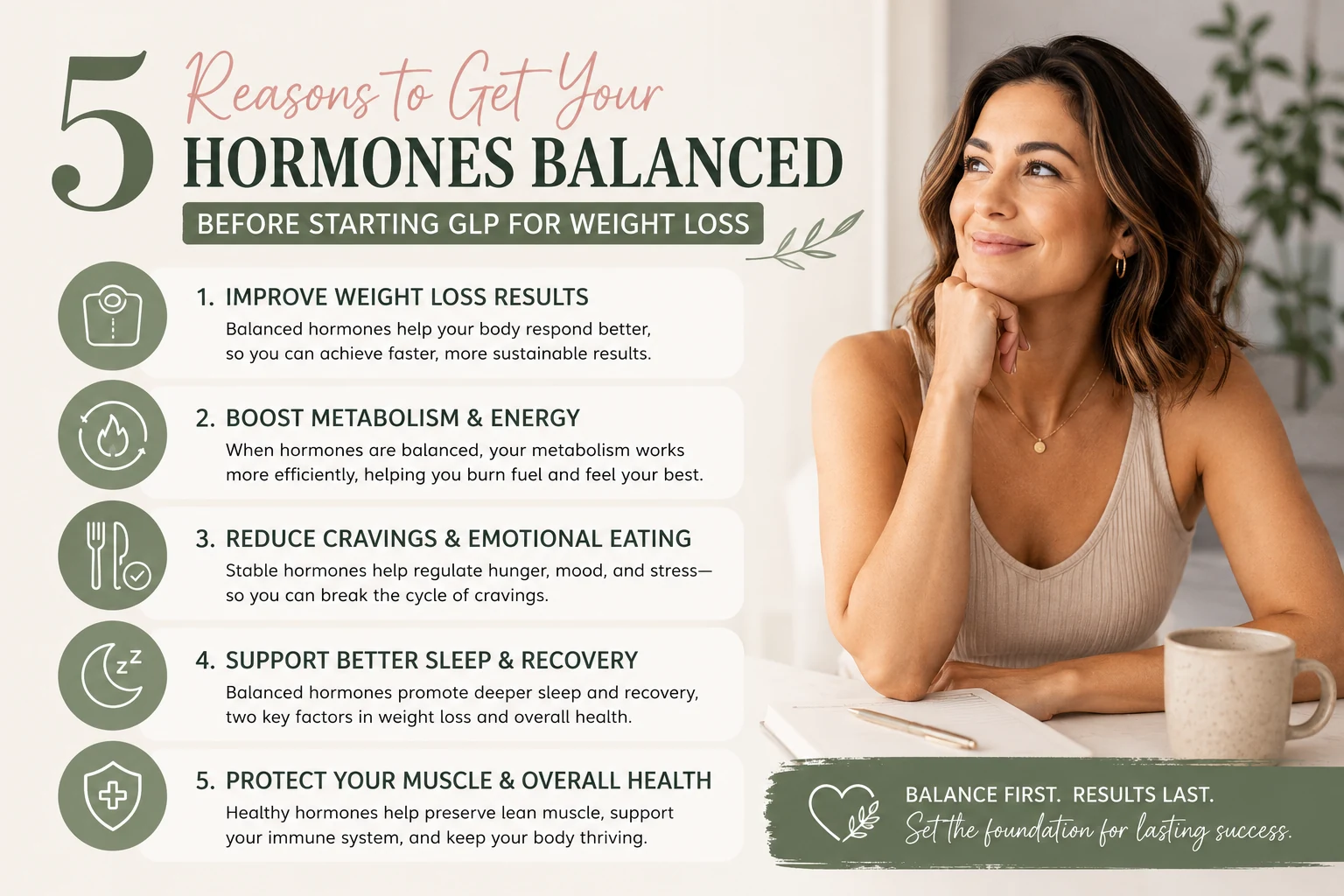
What about hormones and weight?
Hormone therapy is not a weight-loss treatment and is not prescribed for that purpose. Some evidence suggests systemic hormone therapy may modestly influence fat distribution and reduce visceral fat accumulation, and improving hot flashes and sleep can indirectly support weight management. Whether hormone therapy is appropriate for you is a clinical decision made with a licensed prescriber.
Hormone Bliss creams are non-prescription bioidentical hormone support and are not weight-loss products. Our GLP-1 program is separate: it is a telemedicine service where a licensed clinician evaluates whether prescription medication is appropriate for you.
When to bring it to a clinician
- Weight gain is rapid or accompanied by swelling
- You have fatigue, cold intolerance, hair loss, or constipation (possible thyroid involvement)
- Waist circumference is rising alongside blood pressure, glucose, or lipid changes
- You are doing everything described here consistently for six months with no change
- Weight is significantly affecting joints, sleep apnea risk, or mood
Common questions
See whether a clinician-supervised GLP-1 program is a fit for your health history and goals.
Medical Disclaimer: This article is educational and is not medical advice, diagnosis, or treatment. Hormone Bliss creams are non-prescription retail products. Talk with a licensed clinician about your own symptoms, history, and medications before making changes.