
GLP-1 Explained
What GLP-1 is, and how these medications work
Start with the biology rather than the headlines: the hormone behind semaglutide and tirzepatide, what the trials actually measured, what the side effects look like, and where the honest limits sit.
Educational only — GLP-1 medications require a prescription and clinical supervision.

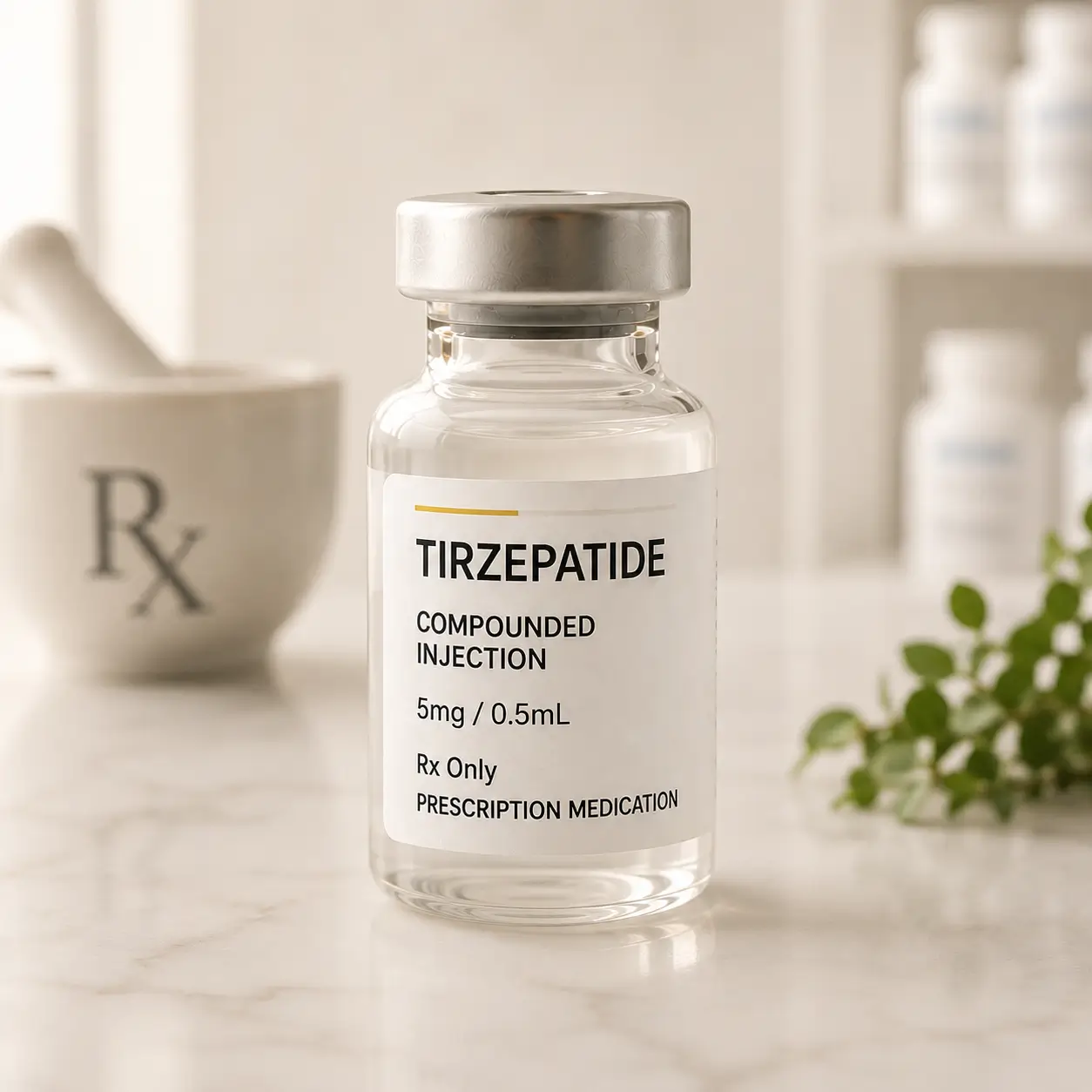
A hormone your body already makes
Glucagon-like peptide-1 is released by your intestines within minutes of eating. It tells the brain you have had enough, tells the pancreas to release insulin when glucose rises, and tells the stomach to empty more slowly.
In many people who struggle with weight, that signal is blunted or short-lived. GLP-1 medications do not add a foreign mechanism — they extend a message your body was already trying to send.
See How Peptides Signal CellsWillpower was never the missing ingredient. When appetite signaling is dysregulated, no meal plan can outwork the biology.
One signal, four steps
The mechanism is far simpler than the marketing suggests. Here is the whole arc, from hormone to weekly dose.
Step one
Your gut releases GLP-1 after you eat
Glucagon-like peptide-1 is a hormone made in the intestinal lining. It is a peptide — a short chain of amino acids — that acts as a messenger the moment food arrives.
Step two
It signals the brain, pancreas and stomach
GLP-1 binds receptors in appetite centers, prompts insulin release only when glucose is elevated, and slows how quickly the stomach empties.
Step three
Natural GLP-1 fades within minutes
Your own GLP-1 is broken down almost immediately, and the signal is often blunted in people with insulin resistance or long histories of weight cycling.
Step four
GLP-1 medications extend the same message
Semaglutide and tirzepatide are engineered to resist that breakdown, so one weekly dose keeps the satiety and glucose signal steady instead of momentary.
Explore GLP-1 Weight Loss
Four systems, one messenger
GLP-1 is not an appetite suppressant in the old stimulant sense. It works through receptors that already exist across several systems at once.
Appetite regulation
Receptors in the hypothalamus and brainstem register fullness sooner, which is why many people describe constant thoughts of food — food noise — quieting.
Glucose-dependent insulin
Insulin release is prompted only when blood sugar is elevated, which is why GLP-1 medications rarely cause low blood sugar on their own.
Slower gastric emptying
Food leaves the stomach more gradually, flattening post-meal glucose spikes and extending satiety between meals.
Cardiometabolic effects
Trials have documented improvements in blood pressure, triglycerides and inflammatory markers alongside weight reduction.
Two molecules, different reach
Both are weekly injectable peptides. The difference is how many incretin receptors they speak to — and that difference shows up in the trial data.
Semaglutide
Single-pathway GLP-1 agonist
The most-studied GLP-1 medication for weight, and the same active ingredient as Ozempic and Wegovy. STEP-1 documented an average 14.9% total body weight reduction over 68 weeks.
Read The GuideTirzepatide
Dual GLP-1 / GIP agonist
Acts on a second incretin receptor (GIP) in addition to GLP-1. SURMOUNT-1 documented up to roughly 22% total body weight reduction at the highest dose.
Read The Guide
What GLP-1 therapy is not
The medication changes a signal. Everything built around that signal decides whether the result lasts.
Not a replacement for nutrition and strength work
Weight lost without adequate protein and resistance training includes lean muscle. The medication changes appetite signaling; it cannot decide what you eat.
Not a short course with permanent results
Research consistently shows appetite signaling returns toward baseline after stopping, which is why maintenance planning is part of responsible care.
Not appropriate for everyone
A history of medullary thyroid cancer or MEN2, active pancreatitis, pregnancy or breastfeeding, and certain GI conditions require a different plan.
Mostly digestive, mostly early
Because GLP-1 slows gastric emptying, most side effects are gastrointestinal and cluster around the first weeks and each dose increase. Slow titration is the single most effective way to reduce them.
- Nausea, bloating, constipation or reflux — most common during the first one to two weeks and while stepping up a dose
- Reduced appetite strong enough to under-eat protein, which is managed with a nutrition target rather than by pushing through it
- Fatigue or headache early on, often tied to lower food and fluid intake
- Rarely, gallbladder issues or pancreatitis — reasons to be evaluated rather than to self-manage
Who may be a good candidate
Likely candidates
- Adults with a BMI of 30 or higher
- BMI of 27 or higher alongside a weight-related condition such as prediabetes, hypertension, PCOS or sleep apnea
- Insulin resistance or metabolic markers that have not responded to nutrition changes alone
- A history of weight cycling where appetite, not effort, has been the barrier
When the answer is no
- Personal or family history of medullary thyroid carcinoma, or MEN2
- Active pancreatitis or significant gastroparesis
- Pregnancy, breastfeeding or actively trying to conceive
- Active eating disorder without concurrent specialist care

GLP-1 is one lever, not the whole system
Thyroid function, cortisol, estrogen, progesterone and insulin all influence how easily weight moves. Treating appetite while ignoring those inputs is why some people stall on a perfectly reasonable dose.
If you are in perimenopause or menopause, start with hormones explained — then read how a GLP-1 protocol is actually run on our GLP-1 weight loss program page.

Semaglutide vs tirzepatide
Two once-weekly injections, two different mechanisms. Our cornerstone comparison lays out average weight loss, tolerability, dosing and real cost side by side — so the decision is informed rather than guessed.
Where to go from here
Across the site
- Semaglutide explained — the most-studied GLP-1 medication for weight.
- Tirzepatide explained — dual GLP-1 and GIP action.
- Semaglutide vs tirzepatide — a side-by-side comparison of the evidence.
- Peptides explained — the wider class of signaling medicines GLP-1 belongs to.
- HRT and BHRT explained — the hormonal foundation underneath metabolism.
- Resources and downloads — guides and workbooks from Dr. Tammy.
GLP-1 questions
Ready to look at a protocol instead of theory? See how GLP-1 therapy works at Hormone Bliss.
Explore physician-guided GLP-1 weight loss
When the science makes sense, see how GLP-1 therapy is actually run at Hormone Bliss — screening, medication sourcing, titration and follow-up.