
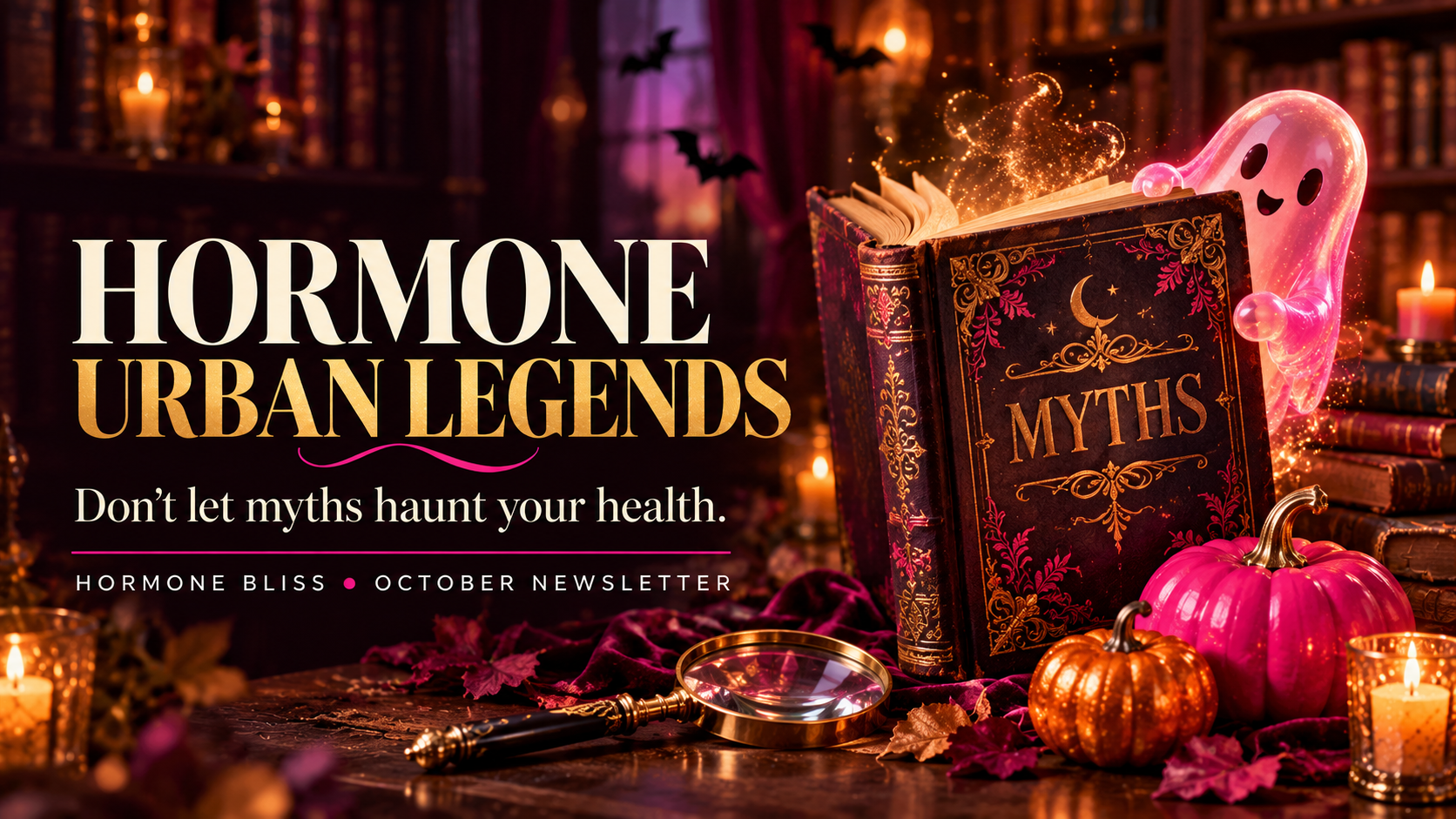
Hormone Urban Legends — Don't let myths haunt your health
Hello, October
Hormone Bliss
October 2026 · Halloween Edition
Hi Beautiful Friend,
31 days. 31 windows. More answers. Less suffering.
Every October window on the haunted mansion below opens one symptom or change worth understanding — with a smile, a wink, and something practical you can actually use.
These are 31 symptoms and changes worth understanding — not a diagnostic checklist. You do not have to have them all. Perimenopause is a time of fluctuating hormones and postmenopause a time of depletion — and those shifts often ripple through the whole system: thyroid, insulin, immune function, and vitamin levels can all be part of the story.
Heard a hormone claim that sounds too spooky to be true? Explore hormone myths — our companion page where we separate legend from fact.
A note from Dr. Tammy
"Halloween is spooky enough. Your symptoms don't need to be a mystery. Open a window, learn one thing, and take one small step toward feeling more like you."

Open if you dare
The Haunted Mansion Symptom Calendar
Tap a numbered window to meet one symptom — a warm, useful guide in about a minute. All 31 windows are unlocked from day one.
A haunted house with 31 numbered windows. Each window opens a short guide to one symptom or change. All windows are unlocked.
You've explored 0 of 31 windows. Every window is always unlocked — no countdown, no rush.Your progress is saved on this device only.
Window 1
Hot Flashes
Your thermostat has joined the circus.
The hormone connection: Estrogen is the main hormone linked here. As estradiol rises and falls, the brain’s temperature-control center can become extra sensitive, so a tiny temperature change can feel like a heat wave.
- Wear removable layers you can peel off the second a flash starts, and keep a small fan in your bag, car, or desk.
- Notice your personal triggers — things like hot drinks, spicy food, alcohol, or stress — so you can spot your own pattern.
Care options: Estrogen-based menopausal hormone therapy is the most effective treatment for hot flashes when medically appropriate. Proven prescription nonhormonal options are available too.
Window 2
Night Sweats
The midnight swimming pool.
The hormone connection: Changing estradiol levels can narrow the brain’s comfort zone for temperature. A small rise in body heat may then trigger sweating and wake you up.
- Switch to breathable pajamas and bedding so your skin can let heat escape instead of trapping it.
- Keep your bedroom cool — a fan, a cracked window, or lighter covers can make a real difference.
Care options: Treatment can target the night sweats themselves. Options include menopausal hormone therapy when medically appropriate and proven prescription nonhormonal treatments.
Good to know: Sweats with fever, unexplained weight loss, or drenching sweats that don't fit your usual pattern need a medical evaluation.
Window 3
Trouble Falling Asleep
Tired body. Party brain.
The hormone connection: Estrogen and progesterone both may play a part. Estrogen shifts can bring hot flashes or mood changes, while progesterone and its brain-active breakdown products interact with calming GABA pathways.
- Wake up at the same time every day and get morning daylight — it sets your body clock better than anything you do at night.
- Cut back on caffeine and alcohol in the evening; both can quietly keep your brain switched on.
Care options: Prescription oral micronized progesterone may improve sleep for some women. (Evidence for the oral form doesn't automatically apply to progesterone cream.) For long-term insomnia, a program called CBT-I is considered the first-line treatment.
Good to know: Loud snoring or waking up gasping can be sleep apnea and deserves a sleep assessment.
Window 4
Waking at 3 a.m.
The witching hour nobody ordered.
The hormone connection: Falling estradiol is often the hormone connection when hot flashes or night sweats cause the waking. Progesterone changes may also affect sleep, but pain, stress, bladder symptoms, and sleep apnea can do the same.
- If night sweats are waking you, treating them is the real fix — the clock isn't the problem.
- If you're awake and frustrated, briefly leave the bed and do something quiet in dim light until you feel sleepy again.
Care options: Treatment should match the cause: hot-flash treatment, pain care, bladder treatment, or sleep-apnea testing may help. Hormone treatment can help when hot flashes or night sweats drive the waking, but it is not a universal fix.
Window 5
Fatigue
Your broomstick needs a recharge.
The hormone connection: Perimenopause is a time of wildly fluctuating hormones, and postmenopause is a time of depletion — both can drain energy. Estradiol and progesterone shifts disturb sleep, temperature control, and mood, which alone can leave you exhausted. These hormonal shifts often travel with thyroid slowdowns, low iron, and low vitamin D or B12, so fatigue is frequently the whole system asking for support, not one single hormone.
- Eat regular meals with protein so your energy doesn't crash between meals.
- Add gentle movement and real rest — both count, and neither has to be perfect.
Care options: Persistent fatigue may call for sleep, anemia, thyroid, and medication testing. Do not automatically buy supplements hoping they will fix it.
Window 6
Brain Fog
Forty-seven tabs. Zero Wi-Fi.
The hormone connection: Estradiol is the hormone most often linked. Estrogen receptors are active in brain areas used for attention and memory, and changing levels can temporarily affect focus and word-finding.
- Do one task at a time instead of juggling — your brain works better with fewer tabs open.
- Use reminders, lists, and regular sleep and movement to take pressure off your memory.
Care options: Persistent or worsening thinking problems deserve a medical evaluation, not just patience.
Good to know: Hormone therapy is not a dementia treatment.
Window 7
Forgetfulness
Where did I park my broom?
The hormone connection: Changing estradiol may briefly affect attention and memory pathways in the brain. It can also disrupt sleep, which makes remembering harder; worsening memory should not automatically be blamed on hormones.
- Give keys, phone, and wallet a home base — one bowl or hook by the door.
- Use a calendar and alarms instead of running a memory marathon in your head.
Care options: Sudden confusion is urgent — get help right away. Memory loss that keeps getting worse over time deserves a proper assessment.
Window 8
Irritability
The tiny things feel enormous.
The hormone connection: Shifts in estradiol and progesterone can affect serotonin and calming GABA signals in the brain. Poor sleep and stress can turn up the volume too.
- Take a short pause before answering when you feel the snap coming.
- Protect your meals, your sleep, and lower what's on your plate — a hungry, tired brain is a cranky brain.
Care options: Helpful options include therapy, support for sleep and stress, and treatment of hot flashes or other symptoms that may be feeding the irritability.
Good to know: There's no promise that progesterone cures moods — treatment should be individualized.
Window 9
Anxiety
Your inner alarm won't stop ringing.
The hormone connection: Fluctuating estradiol and progesterone can influence serotonin and GABA systems involved in calm and alertness. Hormones may contribute, but anxiety is not proof of a hormone problem.
- If caffeine makes the jitters worse, try easing up on it.
- Try slow breathing or grounding: name five things you can see, four you can hear, and so on until the alarm quiets.
Care options: Therapy works, and treatment can be tailored to you. New or worsening anxiety deserves an evaluation, not just a shrug.
Window 10
Low Mood
The sparkle feels missing.
The hormone connection: Estradiol interacts with serotonin and other brain signals involved in mood. Rapid hormone shifts may make some people more vulnerable, but depression has many possible causes.
- Reach for connection — a call, a walk, a coffee with someone who gets you.
- Take a daylight walk; light and movement genuinely help lift mood.
Care options: If low mood persists, it may be depression — assessment and treatment really help.
Good to know: If you feel unsafe or have thoughts of harming yourself, call or text 988 in the US, or 911 in an emergency.
Window 11
Feeling Overwhelmed
Even the costume has a to-do list.
The hormone connection: Perimenopause means hormones that swing up and down instead of flowing in a steady rhythm. Estradiol and progesterone shifts can disturb sleep and mood, while the stress hormone cortisol tends to run high when life feels nonstop. Fluctuating hormones can also affect thyroid and blood-sugar balance — so the overwhelmed feeling is often your whole system running on empty.
- Choose one priority for today and let the rest wait their turn.
- Delegate one task — someone else can handle it, truly.
Care options: Therapy and support can help, and so can treating the symptoms wearing you down.
Good to know: This is a real load on your body — shifting hormones plus a full life — not a character flaw.
Window 12
Lower Sex Drive
The broom is parked.
The hormone connection: Testosterone contributes to sexual desire, while estrogen supports vaginal comfort and blood flow. Sleep, stress, pain, medicines, relationships, and health matter just as much.
- Address any discomfort first — pain is the biggest desire-killer.
- Enjoy pressure-free closeness: touch and time together without an agenda.
Care options: Care can address sleep, stress, medicines, pain, and relationship factors. For some postmenopausal women with distressing, persistent low desire, carefully monitored testosterone may help after a full assessment; it is not a routine treatment for energy or weight.
Window 13
Vaginal Dryness
Comfort belongs on the calendar.
The hormone connection: Lower estrogen is the main hormone connection. Vaginal tissue can become thinner, drier, less stretchy, and less naturally lubricated when estrogen stays low.
- Use a regular vaginal moisturizer (a few times a week) — that's different from a lubricant.
- Use a lubricant during sex for immediate comfort.
Care options: Vaginal moisturizers and lubricants help many people. Low-dose vaginal estrogen is an effective local treatment when medically appropriate.
Window 14
Pain During Sex
No gold stars for pushing through pain.
The hormone connection: Lower estrogen can thin and dry vaginal tissue, making friction painful. Pelvic floor tension, infection, skin conditions, and other causes can also contribute.
- Stop activity that hurts — pain is information, not a challenge.
- Try a lubricant and nonpenetrative intimacy while you figure out the cause.
Care options: An exam can identify tissue changes, infection, or pelvic floor muscle problems. Depending on the cause, vaginal estrogen or pelvic floor physical therapy may help.
Window 15
Vulvar Itching or Burning
Not every itch is yeast.
The hormone connection: Lower estrogen can make vulvar and vaginal tissue thinner, drier, and easier to irritate. The same symptoms can also come from infection or a skin condition.
- Wash gently with unscented products and skip fragranced sprays, wipes, and detergents.
- Wear breathable cotton underwear and avoid anything that traps heat and moisture.
Care options: Persistent symptoms should be evaluated — skin conditions, infection, and genitourinary syndrome of menopause can all look similar. Don't repeatedly self-treat for yeast that isn't there.
Window 16
Urinary Urgency or Frequency
The bathroom tour nobody booked.
The hormone connection: Lower estrogen can change the tissues around the urethra, bladder, and vagina. Those changes may increase urgency or frequency, though infection and other bladder conditions can feel similar.
- Keep a bladder diary for a few days — times, drinks, and urges reveal patterns.
- Look for your triggers; caffeine is a common one.
Care options: Rule out infection (and diabetes if indicated). Depending on the cause, bladder training, pelvic floor therapy, or vaginal estrogen may help.
Window 17
Urine Leakage
Laughing should not need backup.
The hormone connection: Lower estrogen may affect urethral tissue and pelvic support, but it is rarely the whole story. Pregnancy, birth, muscle function, aging, and bladder type all matter.
- A pelvic floor assessment can identify the type of leakage because different types need different treatment.
- Manage constipation; straining makes pelvic floor problems worse.
Care options: Pelvic floor physical therapy and exercises tailored to your type of leakage work far better than doing random Kegels — they're not right for everyone.
Window 18
Recurrent UTIs
An unwanted repeat visitor.
The hormone connection: Lower estrogen can raise vaginal pH and reduce protective lactobacillus bacteria. That makes it easier for infection-causing bacteria to reach the urinary tract.
- Don't hold your urine — go when you need to go.
- Keep up your usual hydration unless you have been given a medical fluid limit.
Care options: Make sure infections are confirmed and fully treated. After menopause, vaginal estrogen may reduce recurrences for some women — worth discussing.
Good to know: Fever or back/flank pain with a UTI needs prompt care.
Window 19
Irregular Periods
Your calendar lost the plot.
The hormone connection: During perimenopause, ovulation becomes less predictable. Estrogen may surge or dip, and progesterone is not made in the usual pattern when ovulation does not happen.
- Track your dates and flow — a pattern is the most useful thing you can bring to an appointment.
- Remember pregnancy is still possible during perimenopause if you're having periods.
Care options: A new bleeding pattern deserves evaluation. Contraception and cycle control may also be useful during perimenopause.
Window 20
Heavy Periods
This is more than a costume emergency.
The hormone connection: Uneven estrogen and progesterone patterns can make the uterine lining build and shed unpredictably. Fibroids, thyroid problems, pregnancy-related causes, and other conditions can also cause heavy bleeding.
- Track your flow — how often you are soaking protection gives useful information during a medical evaluation.
- Heavy bleeding with exhaustion or dizziness can be a sign of anemia and deserves testing.
Care options: Heavy bleeding deserves a medical workup and treatment aimed at the cause.
Good to know: Get urgent care for severe bleeding with faintness or soaking a pad hourly. Any bleeding after 12 months without a period needs prompt evaluation.
Window 21
Breast Tenderness
Even the bra is annoying.
The hormone connection: Fluctuating estrogen and progesterone can make breast tissue hold fluid and feel sore or swollen. A new focal change still deserves prompt attention.
- Wear a truly supportive bra — a fitting can change your whole day.
- Note whether the soreness follows your cycle or started with a new medication.
Care options: Have persistent breast pain reviewed.
Good to know: A new lump, bloody nipple discharge, or skin changes need prompt assessment.
Window 22
Headaches and Migraine
The jack-o-lantern pounding.
The hormone connection: A drop in estrogen—especially around a period—can trigger migraine in people who are sensitive to hormone change. The change in level often matters more than one fixed number.
- Eat regular meals, stay hydrated, and keep a consistent sleep schedule.
- Keep a headache diary — timing and triggers guide the right treatment.
Care options: Migraine treatment is individualized. Mapping attacks against periods, sleep, foods, and other triggers can guide the right treatment.
Good to know: A sudden worst-ever headache, or one with vision changes, weakness, or confusion, is an emergency.
Window 23
Palpitations
A drum solo in your chest.
The hormone connection: Changing estrogen may affect temperature control and the autonomic nervous system, making the heartbeat feel more noticeable. Palpitations can also come from thyroid disease, anemia, medicines, or a heart rhythm problem.
- Track when they happen and what was happening before — that record can help identify a pattern.
- Limit stimulants like caffeine if they seem to set them off.
Care options: Repeated palpitations deserve assessment of heart rhythm, thyroid, anemia, and medicines.
Good to know: Chest pain, fainting, or shortness of breath with palpitations is an emergency — not 'just hormones.'
Window 24
Dizziness
The room shouldn't do tricks.
The hormone connection: Estrogen shifts are a possible connection — they may contribute through hot flashes, migraine, sleep loss, and effects on blood vessels and blood pressure. And because hormonal shifts often coincide with low iron, thyroid changes, and blood-sugar swings, those common dizziness causes deserve a look too.
- Sit down when you feel dizzy — protecting you from falls is the first job.
- Stand up slowly and drink normally throughout the day.
Care options: Repeated dizziness deserves an assessment to identify the cause.
Good to know: New weakness, speech or vision problems, severe headache, or fainting are urgent or emergency symptoms.
Window 25
Joint Aches
Creaky doors, creaky knees.
The hormone connection: Lower estrogen may affect inflammation, pain signaling, and tissues around joints. Menopause can contribute, but arthritis, injury, and other conditions can cause the same ache.
- Move gently every day — stiff joints like consistent motion more than hero workouts.
- Add progressive strength training to support the joints.
Care options: Joints that are persistently painful, swollen, or hot need evaluation.
Good to know: Menopause is not the only cause of aching joints.
Window 26
Muscle Aches
Your muscles want a kinder spell.
The hormone connection: Lower estrogen may affect muscle recovery, inflammation, and how pain is felt. Training changes, medicines, injuries, thyroid problems, and nutrient deficiencies may also be involved.
- Increase exercise gradually — your muscles adapt best without the boom-and-bust cycle.
- Build in real rest and recovery, with protein foods to repair with.
Care options: Persistent aches may need assessment for medication effects, injury, thyroid disease, or deficiencies such as vitamin D or iron.
Good to know: There's no automatic magnesium prescription here — test and treat based on you.
Window 27
Abdominal Weight Gain
Your favorite jeans filed a complaint.
The hormone connection: Lower estrogen is linked with a shift toward storing more fat around the abdomen. Aging, sleep, activity, food patterns, stress, and genetics also shape body composition.
- Build meals around protein and fiber — they keep you full and steady.
- Add resistance exercise and regular walking; muscle is metabolic gold.
Care options: Aging, sleep, and hormone changes all affect body composition. Hormone therapy is not a weight-loss medicine; a personalized metabolic evaluation is more useful than guessing.
Window 28
Bloating
The pumpkin costume fits differently.
The hormone connection: In perimenopause, swinging estrogen and progesterone can affect fluid balance and how the gut moves — a possible connection to the bloat. Hormonal shifts also often come with thyroid slowing, insulin changes, and constipation, which together can make the middle feel extra puffy.
- Track your food and bowel patterns — bloating loves a pattern.
- Eat slowly and manage constipation; both calm the belly.
Care options: New, persistent bloating — especially with pelvic pain or feeling full early — needs assessment.
Good to know: There is no detox cure; your body handles that itself.
Window 29
Dry, Itchy Skin
Less sandpaper, more comfort.
The hormone connection: Lower estrogen can reduce collagen, natural oils, and the skin’s ability to hold water. Weather, soaps, allergies, and skin conditions can add to the dryness.
- Use a fragrance-free moisturizer daily, especially after bathing.
- Take short, lukewarm showers and wear sunscreen — hot water and sun are skin's frenemies.
Care options: Have a persistent rash or itch looked at.
Good to know: No cream — hormone or otherwise — is a guaranteed fix.
Window 30
Thinning Hair
More hair in the brush than planned.
The hormone connection: Lower estrogen can shorten the hair-growth phase, while androgens such as testosterone may have a stronger relative effect on sensitive follicles. Genetics, thyroid disease, iron deficiency, and illness also matter.
- Style gently — less heat, less pulling, kinder hair ties.
- Eat enough protein; hair is built from it.
Care options: A scalp exam plus thyroid and iron testing when indicated can uncover the cause. Evidence-based treatments such as topical minoxidil exist, but the best choice depends on the diagnosis.
Good to know: Skip high-dose biotin marketing; it's not an evidence-backed fix.
Window 31
Dry Eyes
Even your eyeballs want moisture.
The hormone connection: Lower estrogen may change the tear film, while androgens help oil glands along the eyelids work properly. The relationship is complex, and screens, medicines, contacts, and eye conditions can also dry the eyes.
- Take regular screen breaks and blink on purpose — screens make us forget.
- Try preservative-free artificial tears for relief.
Care options: If symptoms persist, get an eye exam.
Good to know: Eye pain or a sudden change in vision is urgent.

Breast Cancer Awareness Month
Scary myths. Real facts. Better decisions.
Fear is not a treatment plan. Neither is pretending risk doesn't exist.
Myth
"Estrogen causes breast cancer."
Fact
This is the old urban legend — and the newest research turns it on its head. In the Women's Health Initiative, women with a hysterectomy who took estrogen alone had lower breast cancer incidence and mortality over long-term follow-up than women who took a placebo.
A new 2025 study presented at The Menopause Society's annual meeting found that women who started estrogen during perimenopause had about 60% lower odds of breast cancer, heart attack, and stroke. That's an association, not proof that estrogen prevents cancer — but it's a very different story than the one we've been told.
Not every regimen is the same — the next card breaks down how risk differs by type, timing, and duration.
Myth
"All hormone therapy has the same breast cancer risk."
Fact
Risk differs by the type of regimen, how long it's used, and your personal history.
The large WHI randomized trials studied two different things: oral conjugated equine estrogen (CEE) alone in women who had a hysterectomy, and CEE plus medroxyprogesterone acetate (MPA) in women with a uterus. Long-term follow-up found lower breast cancer incidence and mortality with CEE alone compared with placebo — but higher breast cancer incidence with CEE + MPA.
These findings do not prove that every estrogen product prevents breast cancer, and they don't show that modern combined regimens carry no risk.
If you have a uterus, systemic estrogen needs adequate uterine protection (a progestogen) to lower the risk of uterine cancer. Low-dose vaginal estrogen is a different, local treatment.
Myth
"Bioidentical means risk-free."
Fact
“Body-identical” describes the chemical structure of a hormone — it is not a safety guarantee.
Custom-compounded hormone products have not been proven safer, and their doses can vary. Any hormone therapy has benefits and risks to weigh with your clinician.
Myth
"Estrogen feeds every breast cancer."
Fact
Hormone-receptor-positive breast cancers can respond to estrogen, but breast cancer biology varies from person to person.
After breast cancer, systemic menopausal hormone therapy is generally avoided — your oncology team should be part of these decisions.
Low-dose vaginal estrogen is different from systemic therapy. It can sometimes be considered after nonhormonal options, through shared decision-making — especially with your oncologist if you take an aromatase inhibitor.
Myth
"If there's no lump, there's no need for screening."
Fact
Screening looks for cancer before symptoms appear. The USPSTF recommends a mammogram every 2 years for average-risk women ages 40 to 74; other organizations differ a little, so personalize the plan to your risk and health.
Know the limits: mammograms miss some cancers (false negatives — especially with dense breast tissue) and sometimes flag something that turns out not to be cancer (false positives). A normal mammogram is reassuring, but it isn't a guarantee — trust what your body is telling you.
Breast MRI can find cancers a mammogram misses, especially in dense breasts, and it's an important tool for many higher-risk women. It's more sensitive but also finds more things that turn out to be nothing — and insurance doesn't always cover it easily. You may need to meet risk criteria or appeal a denial, and it's fair to push back.
Some researchers and patient advocates question how closely the cancer and radiology organizations that write screening guidelines are connected to the businesses that benefit from screening. We mention this not to discourage you from screening, but so you know the facts and feel free to ask questions.
Women at higher risk may need earlier or more frequent screening, or breast MRI.
Myth
"A genetic risk is a death sentence."
Fact
Most people who get breast cancer have no family history and no known genetic mutation.
Even with a BRCA1 or BRCA2 variant, elevated risk is not destiny. Knowing your genetics opens options: earlier and more frequent screening with MRI, risk-reducing strategies, and treatments matched to your tumor type.
Knowledge is power. Genetic counseling turns a scary word into a plan.
Myth
"A normal mammogram means I can ignore new changes."
Fact
A new lump, nipple or skin changes, bloody nipple discharge, or pain that stays in one spot deserves prompt evaluation — even after a normal mammogram.
Small steps that matter
Check your due date
Look up when your last mammogram was and when the next one is due.
Know your history
Learn your family history and ask whether genetic risk counseling makes sense for you.
Notice changes
Get to know how your breasts normally look and feel, and report anything new.
Move & limit alcohol
Regular movement and less alcohol are practical steps for overall health.
Support a woman
Offer a ride, a meal, or company to someone in treatment — if she welcomes it.
Give wisely
If you donate, choose a vetted breast cancer organization you trust.
- New 2025 study: starting estrogen in perimenopause linked to ~60% lower odds of breast cancer, heart attack, and stroke (The Menopause Society 2025, via Contemporary OB/GYN)
- WHI long-term follow-up (JAMA, via PMC)
- WHI estrogen-alone extended follow-up (The Lancet Oncology)
- National Cancer Institute: Menopausal hormone therapy and cancer risk
- USPSTF: Breast cancer screening recommendation
Education only. Your breast cancer risk and hormone choices are personal — know the facts and make the decision that is right for you.
Domestic Violence Awareness Month
You deserve to feel safe.
Abuse is not only hitting. It can include threats, control over money or medicines, cutting you off from friends and family, forced sex, and monitoring your phone or location.
National Domestic Violence Hotline
Text START to 88788
In immediate danger? Call 911 if it is safe to do so.
Help is available even if you are not ready to leave.
If you want to help someone
- First make sure it's a safe time and a safe way to talk. Then ask privately: "Do you feel safe at home?"
- Believe her. Listen. Don't blame. Say: "You don't deserve this. I'm here."
- Respect her decisions. Don't pressure her to leave right away, and don't confront the abuser.
- Offer specific, safe help she wants — like a ride or childcare.
- Leaving can increase danger. A trained advocate can help make a safety plan that fits her situation.
Digital safety
- When possible, use a safer device — like a trusted friend's phone or a library computer.
- Private/incognito browsing and clearing history do not remove every trace.
- If someone's phone or email may be monitored, don't send them resources they didn't ask for.
Learn more: Ways to support a survivor · Internet safety
A little treat
Treats Without the Tricks
Four easy, real-food Halloween recipes — tap each one for the full recipe.
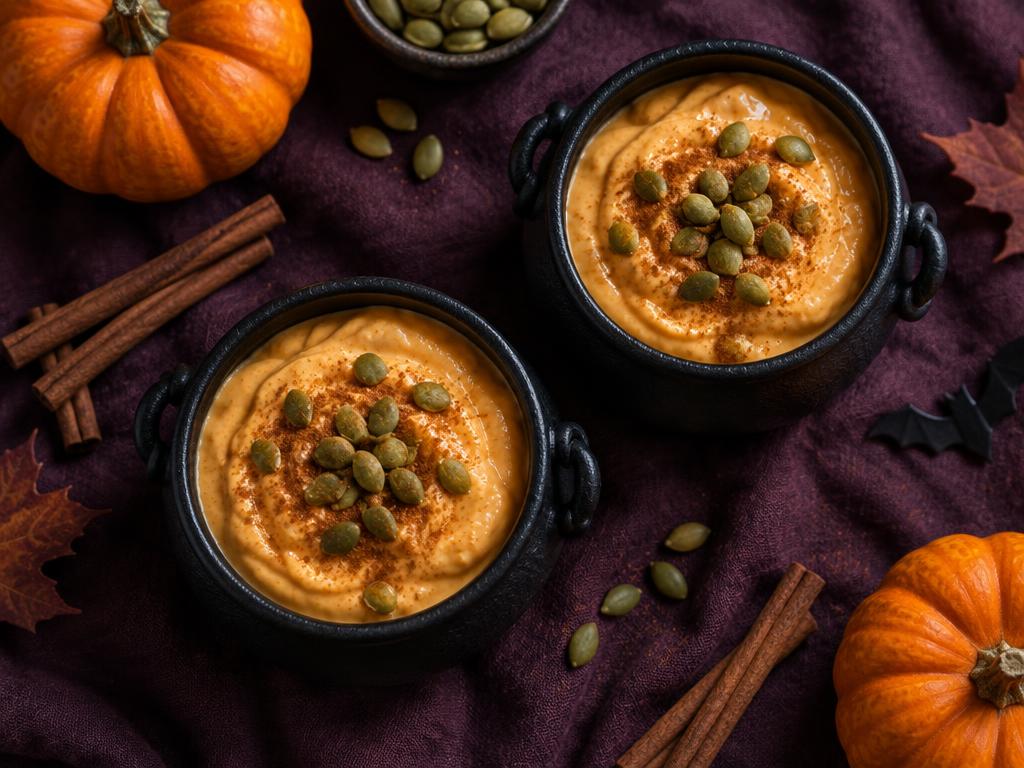
Ingredients
- 1 cup plain Greek yogurt
- 1/2 cup pure pumpkin puree (not pie filling)
- 1/2 tsp cinnamon
- 1/2 tsp vanilla
- 1–2 tsp maple syrup, optional
- 2 tbsp pumpkin seeds
Directions
Stir the yogurt, pumpkin puree, cinnamon, vanilla, and maple syrup together. Split between two bowls and top with pumpkin seeds.
Greek yogurt brings the protein, pumpkin and seeds bring the fiber — a filling treat that actually keeps you full. No hormone-balancing magic, just good food.
Allergies: Dairy allergy? Unsweetened soy yogurt works beautifully.

Ingredients
- 1 tbsp olive oil
- 1 onion, diced
- 1 bell pepper, diced
- 2 cans (15 oz each) black beans, rinsed
- 1 can (14.5 oz) diced tomatoes
- 1 cup pure pumpkin puree
- 1 cup low-sodium vegetable broth
- 1 tsp cumin
- 1 tsp mild chili powder
Directions
Heat the olive oil in a pot over medium heat. Sauté the onion and bell pepper for 5 minutes. Add everything else, stir, and simmer for 20 minutes, stirring now and then. Spice it to your family's tolerance.
The black beans deliver protein and fiber — the combination that keeps energy steady through a night of doorbells.
Allergies: Nothing major here — just check your canned goods for added ingredients you avoid.
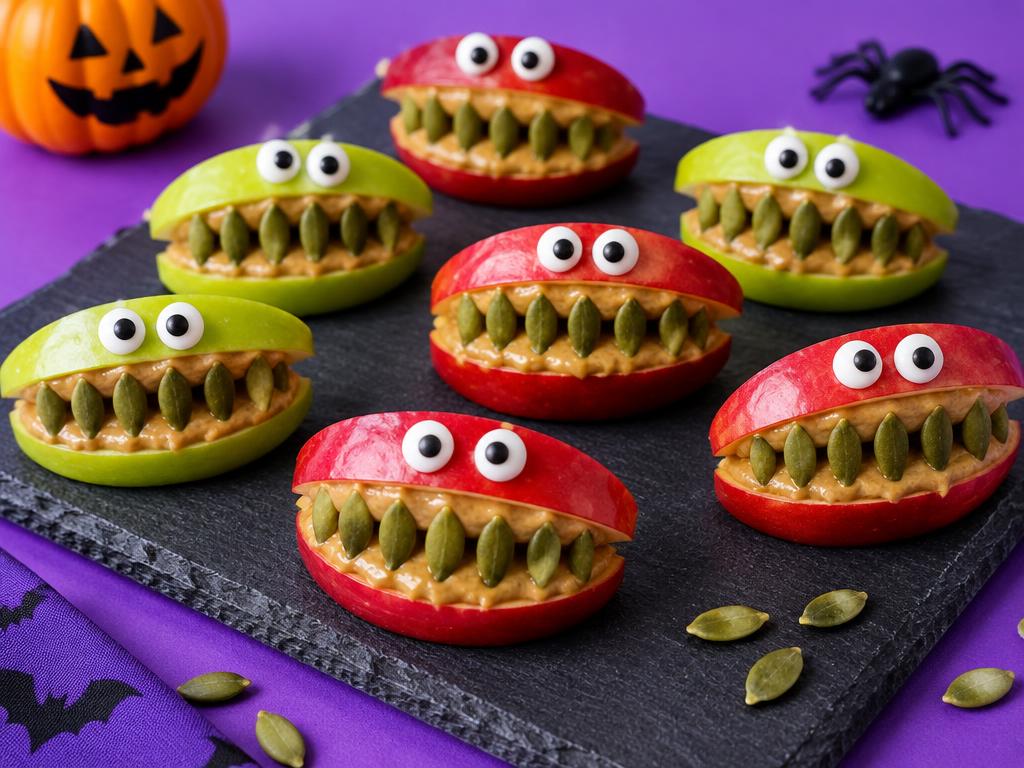
Ingredients
- 2 apples, each cut into 8 wedges
- 4 tbsp sunflower seed butter
- 1/4 cup pumpkin seeds
Directions
Sandwich two apple wedges with sunflower seed butter, then press pumpkin seeds along one edge for monster 'teeth.' Repeat for all eight smiles.
Fiber from the apples plus satisfying fats from the seed butter — a Halloween snack that doesn't hijack anyone's blood sugar.
Allergies: Nut-free and made for it. Seed or seed-butter allergies? Swap in what your family can have. Small hard seeds aren't safe for young kids — chop or skip them.

Ingredients
- 1/2 cup frozen berries, thawed and mashed
- Juice of half a lime
- 2 cups sparkling water
- Ice
Directions
Split the mashed berries and lime juice between two glasses, fill with ice, and top with sparkling water. Give it a witchy stir.
An alcohol-free, festive drink that's genuinely hydrating — no detox promised, no crash delivered.
Allergies: If citrus or carbonation bothers reflux, use less lime or still water.
Presence over perfection
Your kids need you — not a Pinterest production crew

- Choose one fun tradition. Just one. It will be the one they remember anyway.
- Store-bought costumes count. Nobody awards a medal for hot-glue burns.
- Delegate pickup and snacks — you don't have to be every station of the assembly line.
- Eat before the party or trick-or-treating, and bring water with you.
- Give your kids ten phone-free minutes tonight. Ten is enough to matter.
- Set your party exit time before you go — and protect your sleep like the treasure it is.
A two-minute reset for tonight
Plant both feet on the floor. Let your shoulders drop. Take slow, comfortable breaths — no counting gymnastics. Then ask yourself: "What actually matters tonight?"
And if candy is part of tonight? Enjoying it can absolutely fit balanced eating. No guilt, no food shaming — not here, not ever.
Grandmas, aunts, neighbors, and any caregiver holding the fort tonight: this section is for you too. The memories are in the moments, not the matching cupcakes.
"The memories are in the moments, not the matching cupcakes."
Scary Good Deals
25% off the entire store
No tricks. Just thoughtful support.
Use code SPOOKY25 at checkout — through October 31 at midnight. The offer ends October 31, 2026, 11:59 p.m. Central.
SPOOKY25
shophormonebliss.com · code SPOOKY25
Offer details at checkout.
Supplements support specific nutrition needs and are not a cure for menopause.
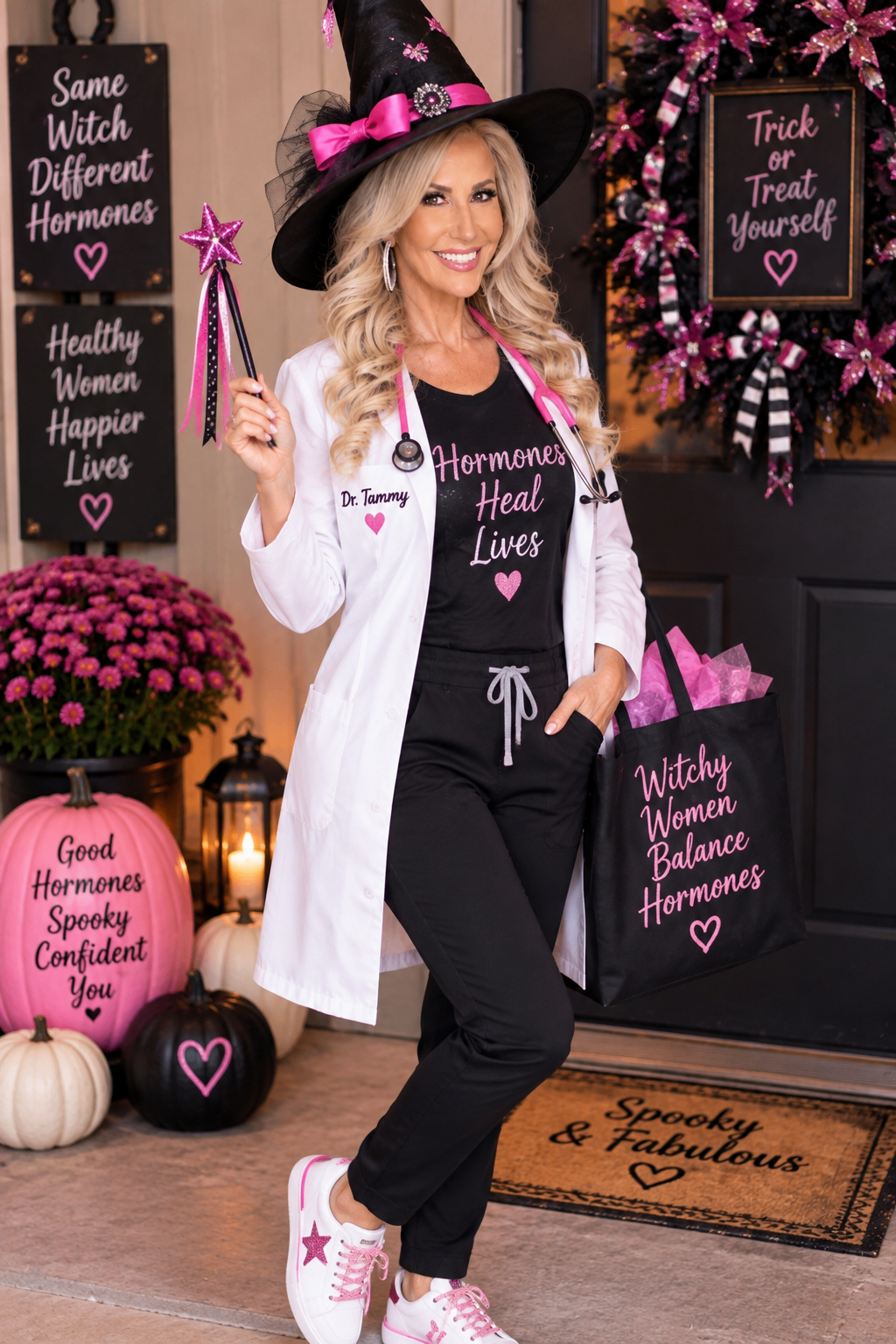
Happy Halloween
Here's to answers, not ghosts
Dr. Tammy Tucker
The Hormone Queen and Menopause Warrior
Hormone Bliss
Share the bliss
Become a Hormone Bliss Ambassador
Spread the word about Hormone Bliss, share your story, and earn rewards for every woman you introduce to better hormone care.
Warm treats, open windows, and fewer tricks.
Hormone Bliss · Hormone Urban Legends · October 2026
Learn more (sources)
This newsletter is general education, not medical advice — it isn't a diagnostic checklist, and it can't replace a conversation about you. Symptoms can have more than one cause, so please bring anything that worries you to your own clinician. Hormone therapy is not appropriate for everyone; treatment should always be based on your symptoms, health history, and an individualized medical evaluation.
More from the newsletter.

Dog Days of Summer: National Wellness Month
Less green juice and guilt. More answers, support, and staying cool while you get them. Inside the August issue: what real wellness looks like, five ways to stay cool when you're already the hottest chick in the room, back to school and back to you, and four cool summer recipes.
Read This Issue
All I Want for Christmas Is… to Feel Like Myself Again
A little Christmas magic. A lot less pressure. And finally, a gift for you. Inside this Christmas in July issue: the gift no one else can wrap for you, our wish list for your energy and sleep, six no-bake holiday treats, and our Christmas in July sale.
Read This Issue
Freedom From Hormone Chaos – Have Fun!
Ready for a 4th of July that feels fun, festive, and not like you need a second nervous system to survive it? Inside this month’s newsletter, we’re talking healthy holiday recipes, simple ways to stay cool when hot flashes try to crash the party, and how to…
Read This IssueSchedule a 15-minute clarity call.
We'll help you decide the right next step — even if that means "not yet."