That evening glass may feel relaxing without helping you stay asleep. Learn what alcohol can change, what hot-flash research does not prove, and what to track.
That evening glass may feel relaxing without helping you stay asleep. Learn what alcohol can change, what hot-flash research does not prove, and what to track.
What's covered
The day is finally done. Your phone is quiet. You pour a glass, take a breath, and feel your shoulders drop. Then the night gets a little less relaxing. You fall asleep, wake up later, and find yourself negotiating with the ceiling.
If that sounds familiar, your evening drink is worth a closer look. Not a guilt trip. A closer look. Alcohol can make you feel sleepy without helping you stay asleep. During a season when sleep already feels unpredictable, that distinction matters.
Sleepy is not the same as well-rested
Alcohol may make falling asleep easier at first. But it can also make sleep lighter and increase nighttime waking. The National Heart, Lung, and Blood Institute advises avoiding alcohol close to bedtime for this reason. A drink that feels like an off-switch at 9 p.m. is not necessarily doing you favors later in the night. [1]
That does not prove alcohol caused your particular bad night. It gives you one useful variable to notice instead of assuming every wake-up is a hormone problem.
Menopause adds context, not a one-size-fits-all explanation
The menopause transition can bring sleep challenges, including night sweats and changes in mood. Stress and other health issues can also be part of the picture. The National Institute on Aging specifically notes that even small amounts of alcohol can make staying asleep harder. [2]
So if your usual nightcap no longer seems like a good trade, you do not have to defend a habit just because it used to fit your life. You can change the ritual without declaring yourself broken, boring, or officially old. The nice glass can stay.
What about alcohol and hot flashes?
This is where the internet often gets ahead of the evidence. Alcohol is commonly discussed as a possible hot-flash trigger. But The Menopause Society says trigger avoidance has limited solid evidence or has not shown significant benefit in trials. Avoiding alcohol is not a proven hot-flash treatment for everyone. [3]
You can take your own observations seriously without turning them into a universal rule. A repeated pattern is worth discussing. One sweaty night is not a diagnosis. And ongoing, disruptive symptoms deserve more than a lecture about your wine glass.
Try curiosity instead of a new set of rules
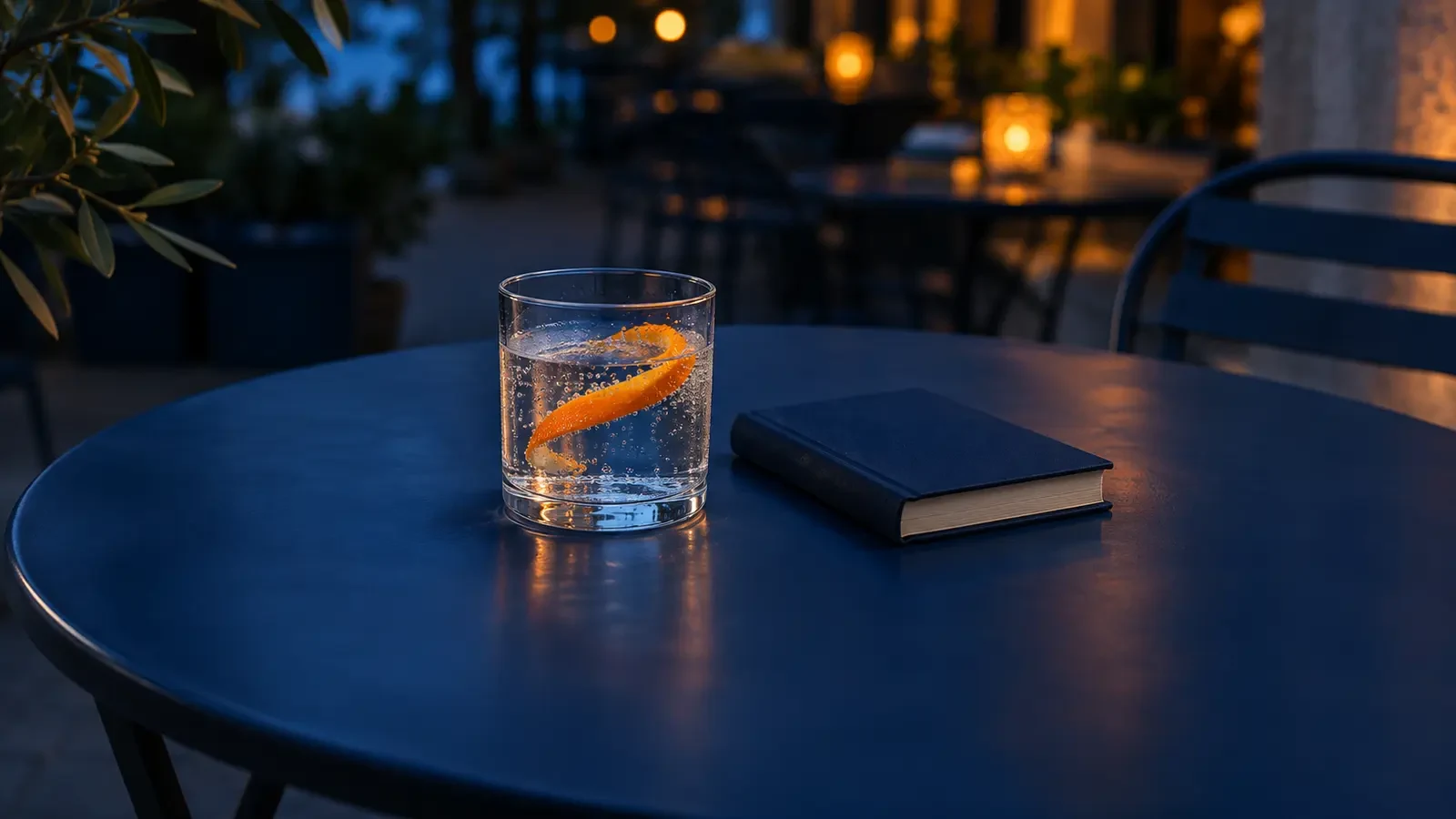
If you drink occasionally and can safely choose alcohol-free evenings, keep the enjoyable part of your wind-down routine and change the beverage. Try sparkling water with citrus, or another caffeine-free option you actually like. This is a personal observation exercise, not a treatment or a test that can diagnose anything.
For a short stretch, jot down a few details. Keep it simple enough that you will actually do it:
- Whether you drank alcohol, roughly how much, and when.
- Your bedtime and nighttime wake-ups.
- Whether you noticed heat or sweating.
- How you felt the next morning.
- Anything else unusual, such as late caffeine, stress, or a schedule change.
Do not overhaul five habits at once and then try to guess which one mattered. You are looking for useful information, not earning a gold star. If you notice no clear change, that is information too.
One important safety exception
If you drink heavily or regularly feel shaky, sweaty, sick, or anxious when alcohol wears off, do not suddenly stop on your own. Alcohol withdrawal can be dangerous, and sometimes life-threatening. Get medical help to make a safe plan. This is not a situation to push through with willpower. [4]
If sleep stays messy, widen the conversation
Changing a drink is not a complete sleep plan. If trouble sleeping keeps affecting your day, bring the pattern to a clinician. Ask what else could be contributing and what options fit you. Cognitive behavioral therapy for insomnia, or CBT-I, is an evidence-based treatment that goes beyond basic bedtime tips. [5]
At Hormone Bliss, we want you to have useful questions, not another reason to blame yourself. Start with this one: What helps me unwind, and what actually helps me feel rested? They may not be the same thing.
Frequently asked questions
Sources
- 1
National Heart, Lung, and Blood Institute
Insomnia Treatment. Reviewed November 2, 2026. https://www.nhlbi.nih.gov/health/insomnia/treatment
- 2
National Institute on Aging
Sleep Problems and Menopause. Reviewed November 2, 2026. https://www.nia.nih.gov/health/menopause/sleep-problems-and-menopause-what-can-i-do
- 3
The Menopause Society
Hot Flashes. Reviewed November 2, 2026. https://menopause.org/patient-education/menopause-topics/hot-flashes
- 4
NIAAA Rethinking Drinking
Should You Cut Down or Quit?. Reviewed November 2, 2026. https://rethinkingdrinking.niaaa.nih.gov/thinking-about-change/cut-down-or-quit
- 5
NCCIH
Sleep Disorders and Complementary Health Approaches. Reviewed November 2, 2026. https://www.nccih.nih.gov/health/sleep-disorders-and-complementary-health-approaches